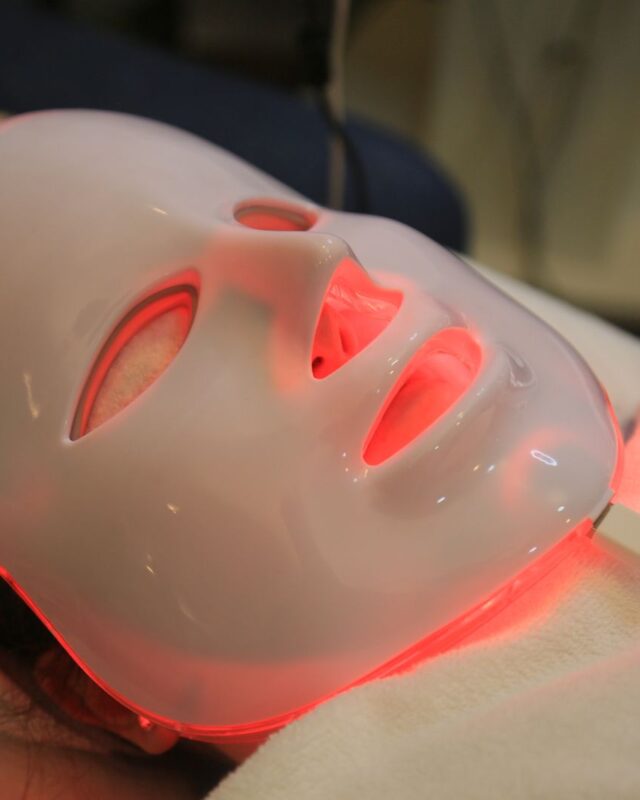
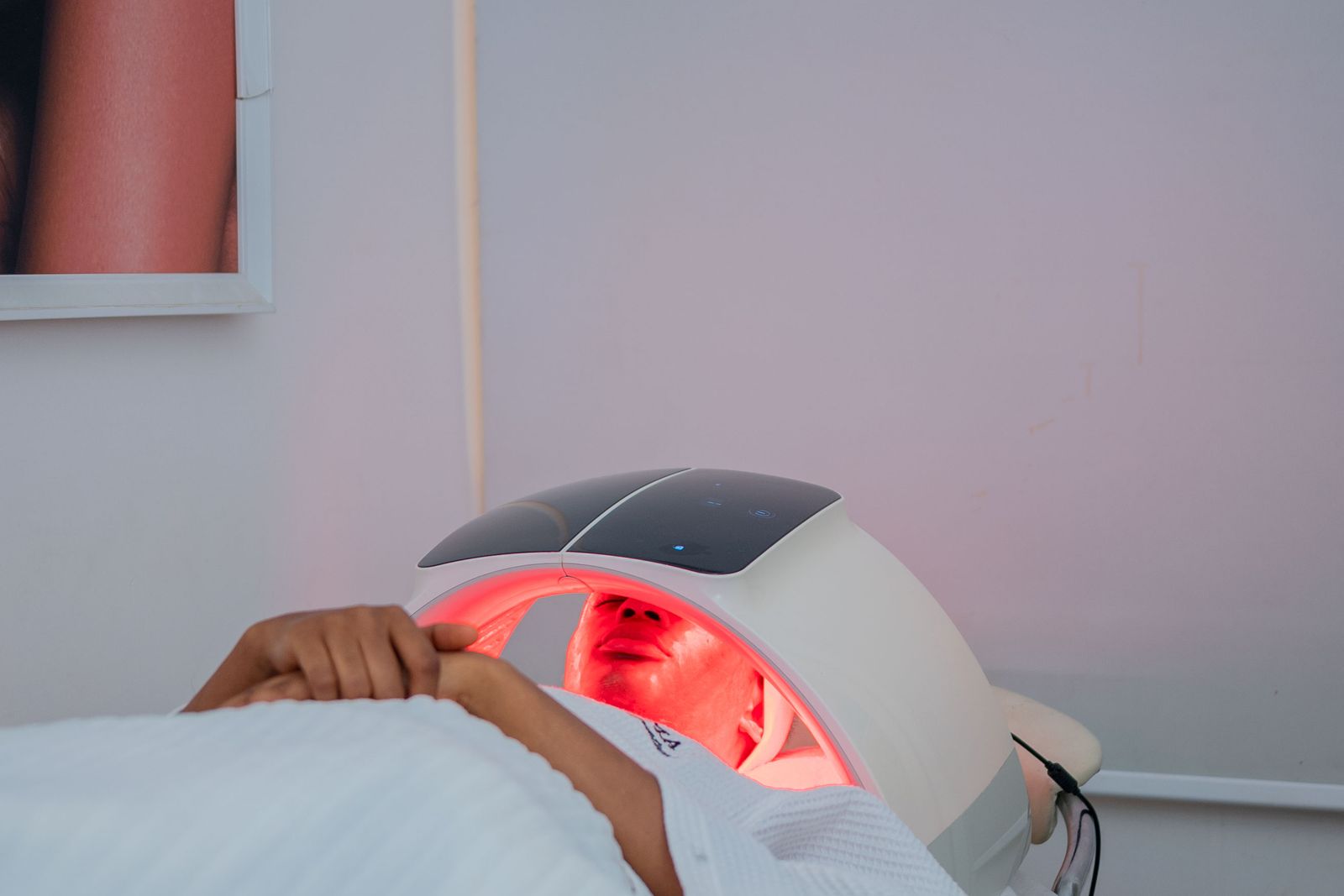
Short answer: Most people should use red light therapy two to three times a week, for the session length their device recommends, and keep going for at least two to four months before judging it. That matches what the Cleveland Clinic advises and what the main skin and hair studies used. Doing it more often is not proven to work better, and lab research suggests too much light can cancel out the benefit.
How often should you use red light therapy? It comes down to three numbers: how many sessions a week, how many minutes per session, and how many weeks you keep it up.
This guide is for anyone who has a red light therapy device, or is about to buy one, and wants a schedule that gives it a fair chance without wasting time or overdoing it.
It covers the schedules real studies used for skin, hair and muscle recovery, how long a session should be, whether you can do red light therapy every day, when to use it around exercise, and how long results take.
The short verdict: two to three sessions a week, following your device’s timing, for at least eight to sixteen weeks. Consistency matters far more than doing extra.
How often should you use red light therapy?
For most goals, use red light therapy two to three times a week, and keep going for weeks to months. That is the pattern the medical sources and the better studies share.
The Cleveland Clinic says most uses call for sessions one to three times a week, for weeks or even months.
That range fits the research. The skin trial covered in our guide to whether red light therapy works used two sessions a week, and hair loss treatments are usually used two to three times a week.
If your device’s instructions say something different, follow them. Devices vary a lot in power, so the right time for one can be too much or too little for another.
Why is there no single red light therapy schedule?
There is no single schedule because the dose you get depends on your device’s power, how close it is to your skin and how long you use it, and those vary from device to device. Scientists have not agreed an ideal dose yet.
Harvard Health notes that scientists have not yet pinned down how long each treatment session should last. It adds that over-the-counter devices vary in strength, so it is hard to know which one is optimal.
Think of it like sunlight on a plant. Ten minutes of weak light and two minutes of strong light can deliver a similar amount of energy, which is why a minute count on its own does not tell you much.
The American Academy of Dermatology also points out that the red light dermatologists use is more powerful than home devices. So a clinic schedule is not something to copy minute for minute at home.
That is why the most reliable single instruction is the one printed on your own device. So when you ask how often should you use red light therapy, start with those instructions; the schedules below tell you what frequency and time frame to expect, not an exact dose.
What red light therapy schedules did the studies use?
The studies behind red light therapy mostly used two or three sessions a week over several months, with timing around exercise for muscle recovery. This table shows red light therapy frequency by goal.
| Goal | How often | For how long | Where this comes from |
|---|---|---|---|
| Skin texture and fine lines | Twice a week | 30 sessions, about 4 months | Randomised controlled trial, 2014 |
| Pattern hair loss | Two to three times a week, 8 to 15 minutes | 12 to 26 weeks before improvement | DermNet |
| Muscle recovery | Once, before or after a workout | Effects measured at 24 and 48 hours | Small randomised trial, 2022 |
| Tendon pain | Alongside an exercise programme | Varied between trials | Meta-analysis, 2021 |
| General use | One to three times a week | Weeks or months | Cleveland Clinic |
Each of these is covered in its own section below, including how strong the evidence behind it is.
For skin
For skin, twice a week for around four months is the schedule with the best evidence behind it. That is what a controlled trial on wrinkles and skin roughness used.
The trial, published in 2014, gave volunteers two sessions a week until they had 30 sessions. The treated groups showed better skin complexion, less roughness, more collagen density and fewer visible wrinkles than an untreated group.
It used large lamps rather than handheld devices, so the exact minutes do not transfer to a home gadget. The weekly rhythm and the months-long commitment do.
For hair loss
For pattern hair loss, two to three sessions a week of 8 to 15 minutes is typical, and it takes 12 to 26 weeks before some people see improvement. This is the longest commitment of any common use.
DermNet says two to three treatments a week are typically recommended, each an 8 to 15 minute exposure of the scalp. It reports improvement in at least some users after 12 to 26 weeks.
DermNet also stresses regular use over a long period, typically a year. It notes that published trials have been criticised for not being independent, so treat the results as promising rather than settled.
How long should a red light therapy session be?
A red light therapy session should last as long as your device’s instructions say, which for most home devices is somewhere between about 8 and 20 minutes. Longer is not better.
There is no universal answer, because a session’s length only makes sense next to the device’s power. Harvard Health says the ideal session length has not been pinned down.
For hair, DermNet gives 8 to 15 minutes. Our Portable Red Light Therapy Belt is designed for 10 to 20 minute sessions, with a built-in timer so you do not have to watch the clock.
If you are unsure, start at the shorter end of your device’s range. You can always add a few minutes later, but there is no evidence that long sessions speed anything up.
Can you do red light therapy every day?
You can do red light therapy every day if your device is designed for daily use, but there is no good evidence that daily sessions work better than two or three a week. More light is not automatically more benefit.
The main studies above used two or three sessions a week, not daily sessions. So daily use is not what the evidence tested.
Some home devices are designed for short daily sessions. Our Red Light Therapy Wand, for example, suggests 12 minutes a day on its product page. Follow the timing for the device you actually have.
What you should not do is add up sessions or double the recommended time to catch up after missing a few days.
What happens if you use red light therapy too much?
Using red light therapy too much can make it less effective rather than more, because light therapy follows what scientists call a biphasic dose response. A little helps, the right amount helps most, and too much can undo the benefit.
A 2009 review in Dose Response by light therapy researchers explains the idea. Weak stimulation slightly helps, stronger stimulation helps more, but past a peak, even stronger stimulation suppresses the effect.
In one mouse wound-healing experiment the review describes, healing was best at a low dose and actually got worse at the highest dose tested. The authors conclude that low doses can be beneficial while very large doses lose the effect and may become harmful.
Most of that evidence comes from lab and animal research, not people using home devices. But it is a good reason to stick to your device’s timing instead of assuming extra sessions will speed things up.
In day-to-day terms, overdoing it usually just wastes time. The Cleveland Clinic’s safety advice is based on using red light therapy as directed, and the AAD says to wear eye protection if the directions tell you to.
Should you use red light therapy before or after a workout?

For muscle recovery, research suggests using red light therapy once, either before or after a workout, with before exercise showing the most consistent results. Doubling up with both did not clearly help.
A 2022 randomised, placebo-controlled trial in 12 amateur CrossFit athletes tested light before a workout, after it, or both. Using it before or after improved performance on functional tests and muscle damage markers at 24 and 48 hours compared with a placebo.
Using it both before and after gave mixed results, which the researchers suggested could reflect too much light. The study was small, only included men, used a clinical device combining lasers, LEDs and a magnetic field, and only followed people for 48 hours.
A 2024 review of 12 systematic reviews found the best results when light was used before exercise, but rated the underlying evidence as low quality.
For tendon pain, a 2021 meta-analysis found light therapy worked best when combined with exercise rather than on its own. So if you use a wearable like our Belt for aches, pair it with your stretching or physio exercises rather than using it instead of them.
How many sessions of red light therapy before you see results?
Expect to need dozens of sessions over two to six months before you see results for skin or hair, while muscle recovery effects in studies were measured within a day or two. Some people never see a difference.
- Skin: the skin trial ran for 30 sessions over about four months.
- Hair: DermNet reports improvement in some users after 12 to 26 weeks, with regular use over about a year.
- Muscle recovery: the CrossFit trial measured changes at 24 and 48 hours after a single workout.
- Everything else: the Cleveland Clinic says weeks or even months.
The AAD is honest about it: it takes time to see results, and not everyone sees them.
That is why judging a device after two weeks is too early. Give it at least eight to twelve weeks for skin before deciding, and longer for hair.
How do you build a red light therapy routine?
Build a red light therapy routine by picking one goal, following your device’s session time, fixing two or three days a week, and tracking progress with photos for at least two months. Routine beats intensity.
- Pick one goal. Skin, hair or post-workout aches each have a different schedule and time frame.
- Read your device’s instructions. Use its session length and distance, not a number from another device.
- Choose fixed days. For example Monday, Wednesday and Friday. Fixed days are easier to keep than “whenever I remember”.
- Take a starting photo. Same light, same angle, then repeat every four weeks. Small changes are easy to miss.
- Protect your eyes if the directions say so, as the AAD advises.
- Stop if your skin reacts with irritation, and check with a doctor before restarting.
- Review at eight to twelve weeks. If nothing has changed by then, extend for hair, but for skin consider whether it is right for you.
Who should not use red light therapy regularly?
People taking medicines that make skin sensitive to light, or with conditions like lupus, should not use red light therapy without medical advice. The same applies to anyone using it for pain that has not been diagnosed.
The AAD says to avoid red light therapy if you take medication that increases your skin’s sensitivity to light, or have a condition like lupus. DermNet gives the same caution for photosensitising medicines.
If you are using red light for aches, get ongoing or worsening pain checked first. Our Belt’s own product page is clear that it is not a medical device and not a treatment for any condition.
For the full picture on safety and what the evidence supports, see our guide to what the evidence says about red light therapy.
Frequently asked questions
How many times a week should I use red light therapy?
Two to three times a week suits most goals. The Cleveland Clinic says one to three times a week, and skin and hair studies used two or three sessions a week.
Can you do red light therapy every day?
Only if your device is designed for it. Daily use is not proven to work better than two or three sessions a week, and lab research suggests too much light can reduce the benefit.
How long should a red light therapy session be?
As long as your device recommends, usually around 8 to 20 minutes for home devices. Harvard Health says scientists have not pinned down an ideal session length.
How long does it take for red light therapy to work?
Usually months. The skin trial ran about four months, and DermNet reports hair improvement after 12 to 26 weeks. The AAD says not everyone sees results.
Can you overdo red light therapy?
Yes. Light therapy follows a biphasic dose response, where the right dose helps but much larger doses can lose the benefit, according to a 2009 review. Stick to your device’s timing.
Is it better to use red light therapy before or after exercise?
Before exercise shows the most consistent results in reviews, though a small trial found benefits either before or after a workout. Using it both before and after did not clearly help.
Do I need to keep using red light therapy forever?
For hair, DermNet stresses long-term, regular use, typically a year. For other uses, the Cleveland Clinic describes courses of weeks or months, so expect ongoing sessions if you want to keep any effect.
What time of day is best for red light therapy?
None of the sources we checked found that time of day matters. Pick a time you can stick to, since consistency is what the studies relied on.
Final thoughts
How often should you use red light therapy? Two to three times a week, for your device’s session time, for at least two to four months. Doing more is not proven to help and may work against you.
If you are using it for skin, plan on twice a week for around four months, with photos to track changes. A face device like our Red Light Therapy Wand should be used on its own recommended timing.
If you are using it for hair, expect two to three sessions a week for at least 12 to 26 weeks, and ideally a year, alongside any treatment your dermatologist suggests.
If you are using it for aches or recovery, try a single session before or after exercise, not both. A wearable like our Red Light Therapy Belt fits that routine, as an add-on to exercise rather than a treatment.