Short answer: Red light therapy works for some things, but not everything it is sold for. The best evidence is for modest improvements in skin texture, fine lines and collagen, with weaker, lower-quality evidence for muscle recovery and tendon pain, and no evidence at all for weight loss or cellulite. It appears safe when used as directed, but results take weeks and not everyone sees them.
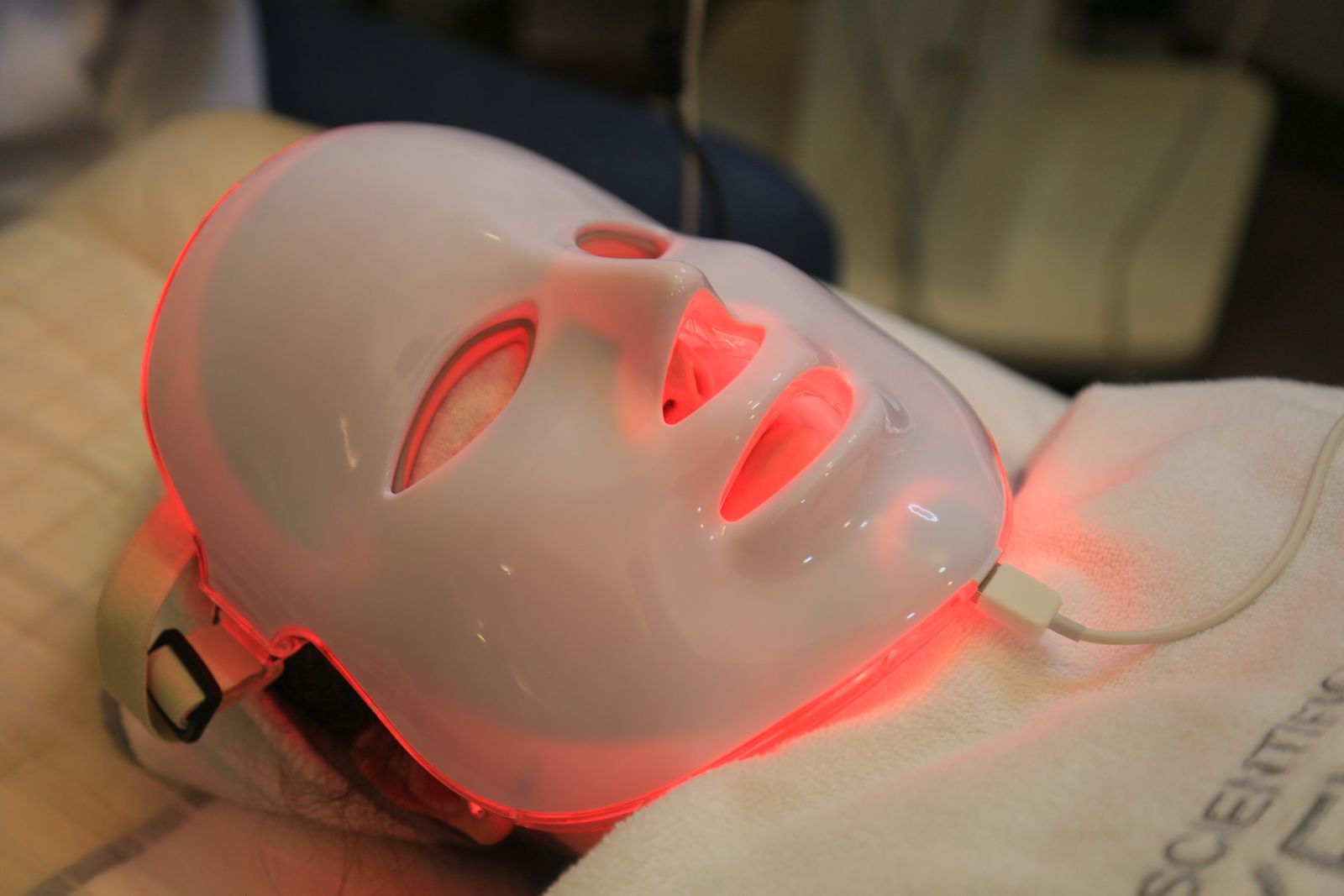
Red light therapy is a treatment that shines low levels of red or near-infrared light on the skin, with the aim of improving how the skin looks or how muscles and joints feel.
This guide is for anyone asking whether red light therapy works before spending money on a device or a course of clinic sessions.
It covers what red light therapy is, how it is supposed to work, what the studies actually show for each use, what it does not do, how safe it is, and how long results take.
The short verdict: does red light therapy work? Yes, for a few specific uses and with realistic expectations. It is a gentle, slow add-on, not a replacement for proven treatments.
What is red light therapy?
Red light therapy is a non-invasive treatment that uses red or near-infrared light, and its medical name is photobiomodulation. It is not the same as ultraviolet light, which damages skin.
The American Academy of Dermatology describes it as a non-invasive treatment using red or near-infrared light, also called photobiomodulation.
Harvard Health notes it was previously called low-level laser light therapy, which is why older studies use that name.
Red light is the part of the spectrum you can see. Near-infrared sits just beyond it and is invisible, which is why many devices, including light panels and wearable wraps, use a mix of the two.
Most home devices deliver the light through LEDs. Clinic devices do the same job at higher power, which matters when you look at the evidence.
How is red light therapy supposed to work?
Red light therapy is thought to work by giving cells, specifically their mitochondria, more energy to repair and renew themselves. The exact mechanism is still being studied.
The Cleveland Clinic explains that red light is believed to act on the mitochondria, the energy-producing parts of cells. With more energy, cells may repair skin and grow new cells more efficiently.
It lists several proposed effects: stimulating collagen, increasing fibroblasts (the cells that make collagen), boosting blood circulation and reducing inflammation.
Note the careful wording in that explanation: believed, may, proposed. A plausible mechanism is a reason to test a treatment, not proof that it works for every claim made about it.
Does red light therapy work? The evidence by use
Red light therapy has the strongest evidence for skin texture and fine lines, mixed evidence for acne, hair loss, muscle recovery and tendon pain, and no evidence for weight loss, cellulite, cancer or mental health. This table sums up where each use stands.
| Use | What the evidence says | How strong it is |
|---|---|---|
| Fine lines, skin roughness, collagen | Improvement in a randomised controlled trial | Moderate, but trials are small and short |
| Acne | Offered by some dermatologists, usually alongside other treatment | Limited |
| Hair loss | Some, but not all, studies show some regrowth | Mixed |
| Muscle recovery and soreness | Most studies favourable, best used before exercise | Low quality |
| Tendon pain | Helps most when combined with exercise | Very low to moderate |
| Acute injuries | Little benefit beyond usual treatment | Largely inconclusive |
| Weight loss, cellulite, cancer, mental health | No scientific evidence | None |
So is red light therapy effective? It depends on the use. The Cleveland Clinic sums up the red light therapy evidence as a whole: most experts say they do not yet know if red light therapy is effective for all its claimed uses, and more quality studies with larger numbers of people are needed.
Does red light therapy work for wrinkles and skin?
Yes, modestly: a controlled trial found red light improved skin roughness, complexion and collagen density, and reduced the look of wrinkles, over about four months. This is the best-supported use.
The trial, published in Photomedicine and Laser Surgery in 2014, randomly assigned 136 volunteers to red light, a broader red and near-infrared light, or no treatment. The treated groups had two sessions a week, 30 in total.
Both treated groups showed improved skin complexion, reduced roughness and increased collagen density in the skin. On wrinkles, 69% of the red light group and 75% of the broader light group improved, compared with 4% of the untreated group.
There are limits worth knowing. The study used large lamps rather than a handheld home device, and the authors say long-term results still need to be tested.
The AAD’s view is similarly measured. It says some studies show red light can produce subtle to noticeable results, but that more research is needed and the effects of red light on skin are still not fully understood.
If you are weighing up cheaper options first, our guide to facial massage for wrinkles covers what the studies found for massage, gua sha and rollers.
What about acne and hair loss?
Acne and hair loss are both uses dermatologists offer, but the evidence is weaker and less consistent than for skin texture. Expect red light to be one part of a plan, not the whole plan.
The AAD says dermatologists offer red light therapy for acne, signs of ageing and hair loss, and that they usually recommend it alongside other treatments such as medicated creams, microneedling or chemical peels.
On hair, it says results from some, but not all, studies show red light can regrow some hair over time with repeated treatments.
Does red light therapy work for pain and muscle recovery?
Red light and near-infrared therapy may help muscle recovery and tendon pain a little, but the studies behind it are mostly low quality. It looks more promising as an add-on to exercise than on its own.
A 2021 meta-analysis of 17 randomised trials with 835 people looked at tendon pain. Light therapy on its own worked about as well as other treatments, and adding it to exercise reduced pain more than exercise with a sham light.
The authors rated the evidence very low to moderate quality. Most of the trials used near-infrared wavelengths, and only 4 of the 17 followed recognised dosing guidelines.
For sport, a 2024 review of 12 systematic reviews found around 80% of studies reported favourable results for muscle performance and recovery, especially when light was used before exercise. But it describes the quality of the underlying studies as low.
The same review found results for acute injuries, such as recent shoulder and elbow problems, largely inconclusive, with little benefit beyond normal treatment.
So for aches, think of red light as a possible extra, not a fix. Persistent or worsening pain needs a doctor or physiotherapist, not a device.
What doesn’t red light therapy do?
Red light therapy does not help weight loss, cellulite, cancer or mental health conditions, according to the Cleveland Clinic, whatever marketing claims. These are the claims to walk away from.
The Cleveland Clinic says there is no scientific evidence to support red light therapy for weight loss, cancer, cellulite removal or mental health conditions.
It also cannot undo what needs a stronger treatment. Deep wrinkles, significant sagging or a skin condition that needs medication will not be fixed by a few minutes of light a day.
Be wary of any device promising dramatic, fast results. The honest version of red light therapy is slow, subtle and not guaranteed.
Is red light therapy safe?
Red light therapy appears to be safe when used short term and as directed, and red light therapy side effects are usually limited to temporary redness. Eye protection and a few medical exceptions still matter.
The Cleveland Clinic says red light therapy appears safe and is not associated with side effects when used short term and as directed. Harvard Health adds that, unlike ultraviolet light, it has not been shown to cause skin cancer, and that side effects are minimal and may include temporary redness.
A 2023 systematic review in Aesthetic Surgery Journal looked at 57 studies and found no evidence linking this kind of light therapy to cancer. Across seven skin rejuvenation trials, the only side effect reported was mild, temporary redness in four patients.
That review also notes that most of the clinical evidence comes from small, methodologically flawed single-centre studies. Safe so far is not the same as studied thoroughly.
- Protect your eyes. The AAD advises wearing eye protection if the directions tell you to, using the type recommended.
- Check your medicines. The AAD says to avoid red light therapy if you take medication that makes your skin more sensitive to light.
- Check your conditions. The AAD also lists conditions like lupus as a reason to avoid it.
- Follow the device’s timing. More is not better, and the Cleveland Clinic’s safety view is based on use as directed.
Do at-home red light therapy devices work as well as clinic treatments?
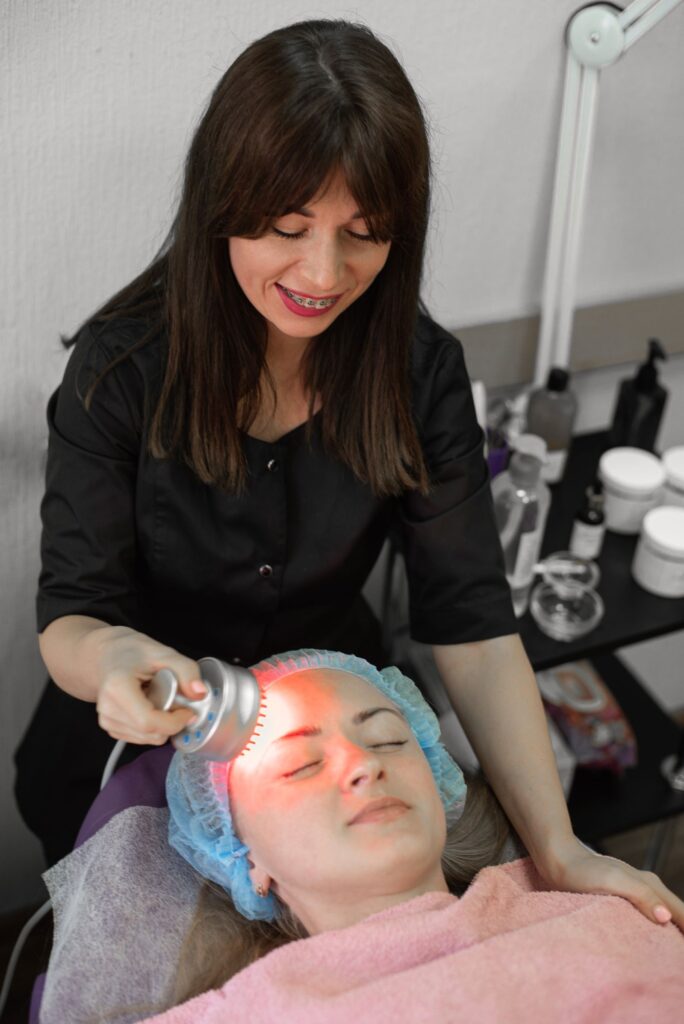
At-home red light therapy devices are generally weaker than the ones dermatologists use, so results may be smaller or slower. The trade-off is convenience and cost.
The AAD says the red light dermatologists offer is more powerful than devices sold for home use. The Cleveland Clinic says the same, noting that home devices may be less powerful and results may be affected.
Harvard Health points out another problem: over-the-counter devices vary in strength, and it is hard to know which one is optimal to buy, because scientists have not pinned down the ideal session length.
That does not mean home devices are useless. It means you should expect gentle, gradual changes and pick a device that states its wavelengths and session times clearly.
How long does red light therapy take to work?
Red light therapy usually takes weeks to months of regular sessions to show results, and some people never notice a difference. Patience is part of the treatment.
The Cleveland Clinic says most uses call for sessions one to three times a week, for weeks or even months. In the wrinkle trial above, people had 30 sessions spread over about four months.
The AAD is plain about it: it takes time to see results, and not everyone sees them.
For a full schedule by goal, including session length and whether daily use helps, see our guide to how often you should use red light therapy.
If you try it, take photos in the same light before you start and every few weeks. Subtle changes are easy to miss, and just as easy to imagine.
Is red light therapy worth trying?
Red light therapy is worth trying if you want a gentle, low-risk add-on for skin texture or post-workout aches and can wait months for modest results. It is not worth it if you want fast or dramatic change.
- You want smoother-looking skin and softer fine lines: red light is a reasonable, low-risk option alongside sunscreen and a good skincare routine.
- You have acne or hair loss: see a dermatologist first, and use light as an extra if they suggest it.
- You want to support muscle recovery: it may help a little, especially before exercise, but the evidence is low quality.
- You have ongoing pain: get it assessed. Light may be an add-on, never the diagnosis.
- You want weight loss or cellulite removal: red light therapy is not the answer.
For the face, our Red Light Therapy Wand combines red light with warmth, galvanic current and massage in a handheld device.
For the body, our Portable Red Light Therapy Belt uses 660nm red and 850nm near-infrared LEDs in a wrap for the back, waist, knees or shoulders. As its product page says, it is not a medical device and not a treatment for any condition.
Frequently asked questions
Does red light therapy really work?
For some uses. A controlled trial found improvements in skin roughness, complexion, collagen density and wrinkles, while evidence for muscle recovery and tendon pain is lower quality. The Cleveland Clinic says there is no evidence for weight loss, cellulite, cancer or mental health.
How long does red light therapy take to show results?
Usually weeks to months. The Cleveland Clinic says most uses need sessions one to three times a week over weeks or months, and the AAD says not everyone sees results.
Is red light therapy safe for everyone?
Not quite. The AAD says to avoid it if you take medication that makes your skin sensitive to light or have a condition like lupus, and to wear eye protection if the directions say so.
What are the side effects of red light therapy?
Usually none, or mild temporary redness. A 2023 systematic review found only mild, short-lived redness across seven skin trials, and Harvard Health says side effects are minimal.
Does red light therapy cause cancer?
There is no evidence that it does. Harvard Health notes that, unlike ultraviolet light, it has not been shown to cause skin cancer, and a 2023 review of 57 studies found no link to cancer.
Is red light therapy the same as infrared?
Not exactly. Red light is visible, while near-infrared light is just beyond what you can see. The AAD includes both under red light therapy, and many devices use both.
Can red light therapy help you lose weight?
No. The Cleveland Clinic says there is no scientific evidence to support red light therapy for weight loss or cellulite removal.
Are home red light therapy devices worth it?
They can be, if your expectations are realistic. The AAD says home devices are less powerful than dermatologists’ devices, so expect slower, subtler results than a clinic course.
Final thoughts
Does red light therapy work? For skin texture and fine lines, modestly and slowly; for aches, possibly a little; for weight loss and cellulite, no. The honest version is less exciting than the marketing.
If you want gentler, smoother-looking skin and can commit to regular sessions for a few months, a face device such as our Red Light Therapy Wand is a low-risk thing to try.
If you want something for everyday stiffness or post-workout soreness, a wearable like our Red Light Therapy Belt is an add-on to exercise and stretching, not a treatment.
If you have a skin condition, hair loss or ongoing pain, see a dermatologist or doctor first, and treat red light as an extra they approve rather than the main plan.