Short answer: A laser fires one single colour of light. IPL fires a whole band of colours at once. In IPL vs laser, that makes lasers more precise and usually a bit more effective, but the research says the gap is smaller than most people assume.
Almost every article comparing IPL vs laser says the same thing. Laser good, IPL cheap.
The actual research is more interesting than that, and a lot more useful if you are trying to decide what to do with your own legs.
Here is what genuinely separates IPL vs laser, and where the difference stops mattering.
IPL vs laser: what is actually different?
It comes down to one thing. Lasers use a single wavelength of light. IPL uses many at once.
Think of a laser as a single pure note played very loudly. Every photon is the same colour, aimed at the same target.
IPL is more like a chord. It emits a broad band of light, then filters out the parts that are not useful.
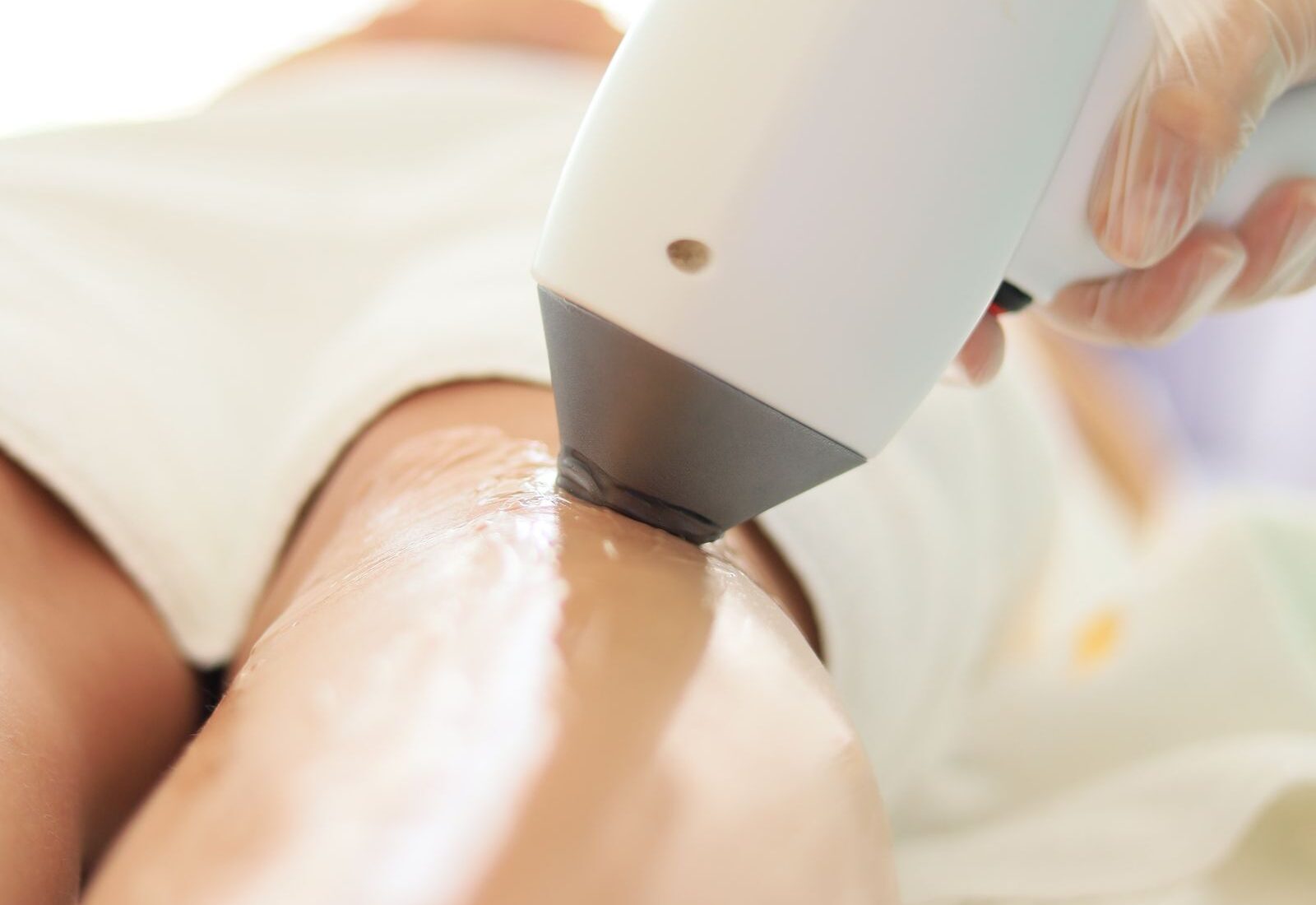
Both work the same way underneath. Light gets absorbed by the dark pigment in your hair, turns into heat, and damages the follicle so it grows less.
The difference is precision. A laser can be tuned to exactly the depth and target it wants. IPL sprays a wider range and accepts that some of it does less work.
That is the whole of IPL vs laser in one paragraph. Everything else follows from it.
IPL vs laser: which removes more hair?
Lasers generally win, but by less than the marketing suggests.
A 2022 systematic review in the Journal of Cosmetic and Laser Therapy pooled trials that followed people for a full hair growth cycle. These were the average long-term reductions.
| Device | Type | Long-term hair reduction |
|---|---|---|
| Alexandrite | Laser | 35% to 84% |
| Nd:YAG | Laser | 30% to 74% |
| Diode | Laser | 33% to 69% |
| IPL | Light source | 27% to 53% |
Source: Krasniqi A, McClurg DP, Gillespie KJ, Rajpara S. Efficacy of lasers and light sources in long-term hair reduction: a systematic review. Journal of Cosmetic and Laser Therapy, 2022.
So yes, the lasers sit higher. But look at the ranges rather than the ceilings.
A good IPL result beats a poor laser result comfortably. The overlap is enormous.
Worth knowing too: that review found only five eligible trials covering 223 people in total. The evidence base for IPL vs laser is thinner than the confidence of most articles about it.
What the research says about IPL vs laser on darker skin
This is where the IPL vs laser question stops being academic, and where most articles are simply wrong.
A 2020 systematic review and meta-analysis in the Journal of the European Academy of Dermatology and Venereology looked specifically at Fitzpatrick skin types III to VI, pooling 12 comparative trials.
Three findings matter.
Nd:YAG and diode lasers were not statistically better than IPL for reducing hair count on these skin types. The assumption that laser always wins does not survive contact with the data.
Alexandrite laser was superior to IPL for hair count reduction. So one specific laser did clearly outperform.
Nd:YAG was safer than IPL for post-inflammatory hyperpigmentation, which is the darkening that can follow treatment on deeper skin.
Put together, the review concluded outcomes were broadly similar across devices, with a trend toward greater reduction from lasers.
The practical takeaway is not “laser beats IPL”. It is that if you have deeper skin, the safety difference matters more than the efficacy difference, and Nd:YAG is the wavelength to ask a clinic about.
The three laser types, briefly
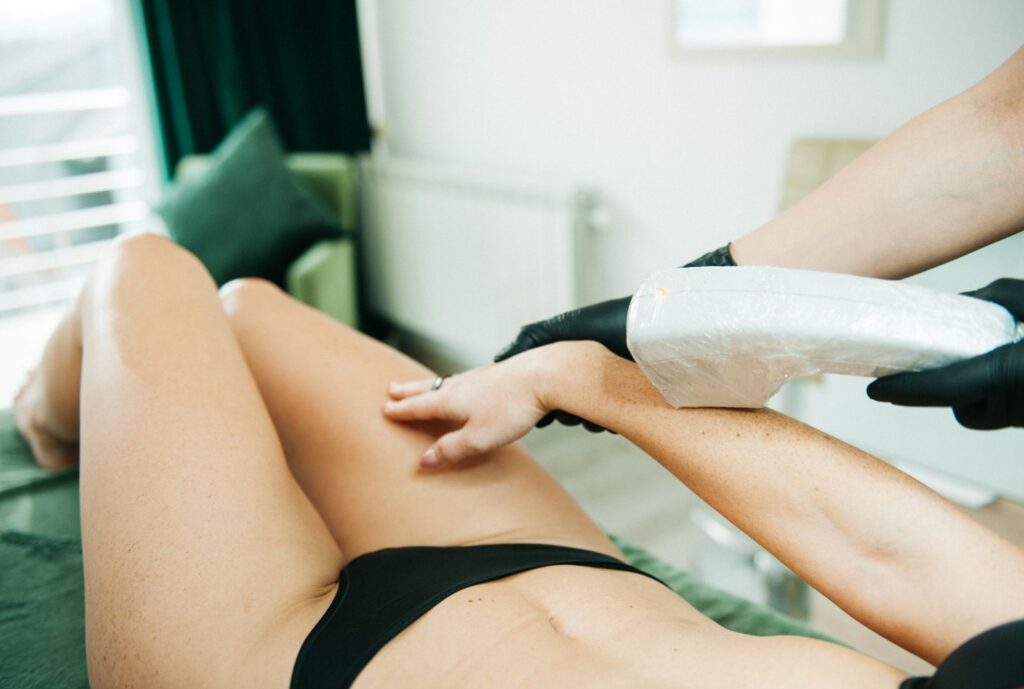
If a clinic quotes you, they will name one of these. Knowing which is which turns a confusing IPL vs laser conversation into a simple one.
- Alexandrite (755nm). Shortest wavelength of the three. Strong on light to medium skin with dark hair. The best performer for hair count in the research above.
- Diode (808nm). The middle option and the most common workhorse. Decent across a fairly wide range of skin tones.
- Nd:YAG (1064nm). Longest wavelength, penetrates deepest, and is absorbed least by the pigment in your skin. That is exactly why it is the safest option for deeper skin tones.
A shorter wavelength is absorbed more by surface pigment. On pale skin that is fine. On deeper skin it is the mechanism behind burns and pigment changes, which is why the long wavelength exists.
IPL vs laser: cost, sessions and convenience
| Clinic laser | At-home IPL | |
|---|---|---|
| Light | One wavelength | Filtered broad spectrum |
| Power | High | Lower, for safety |
| Sessions | 6 to 8 typically | 8 to 12, then top-ups |
| Cost | Per session, per area | One purchase |
| Where | A clinic, by appointment | Your sofa |
| Deep skin tones | Nd:YAG is suitable | Usually not suitable |
| Operated by | Trained technician | You |
The money side is covered properly in IPL cost vs laser hair removal clinics, including how clinic pricing multiplies once you add areas and sessions.
IPL vs laser: side effects and what actually goes wrong
Both are well tolerated by most people. Both can go wrong in the same ways, because both work by putting heat into your skin.
The normal, boring stuff: redness, mild swelling around the follicles, and skin that feels a bit like mild sunburn for a few hours. That settles on its own.
The things worth taking seriously are burns, blistering, and pigment changes. All three come from the same root cause, which is light being absorbed by your skin instead of your hair.
That is why the IPL vs laser choice matters so much on deeper skin. The 2020 meta-analysis found Nd:YAG produced less post-inflammatory hyperpigmentation than IPL on skin types III to VI.
Pain is the honest trade. That same review recorded higher pain scores with lasers than with IPL, which makes sense given how much more energy a laser puts into each pulse.
So the summary is slightly awkward for both camps. Lasers tend to work a bit better and hurt a bit more. IPL is gentler and slower. Neither is the obviously correct answer.
What to ask before you book
If you take one thing from this IPL vs laser comparison into a clinic, make it these five questions.
- Which laser is it? Alexandrite, diode or Nd:YAG. If they cannot tell you, that is an answer in itself.
- Is that wavelength right for my skin tone? Deeper skin should be hearing Nd:YAG.
- Will you patch test first? Any reputable clinic does. Non-negotiable.
- How many sessions, and what does the full course cost? Not the single session price.
- What happens if it does not work? Ask before you pay, not after.
If you are buying a home device instead, the equivalent questions are simpler. Does it suit your hair colour and skin tone, how many flashes does it have, and can you return it if it turns out not to work for you.
Can you do laser at home?
Mostly no, and the ones that exist are not clinic lasers.
Almost every home hair removal device is IPL, not laser. A handful of home diode lasers exist, but they run at a fraction of clinic power and usually have a very small treatment window, which makes doing your legs a long evening.
This is a safety decision rather than a cost one. A device sold for unsupervised use in a bathroom cannot be allowed to deliver clinic-level energy at a single precise wavelength.
So in practice, the real IPL vs laser choice is not “which device do I buy”. It is “do I buy a device, or do I book a clinic”.
Which should you choose?
Choose at-home IPL if you have dark hair on light or medium skin, you want several areas treated, and you would rather not book appointments for six months.
Choose clinic laser if your skin tone is deeper, in which case ask specifically about Nd:YAG, or you want the strongest possible result and are willing to pay per session for it.
For a lot of people the sensible order is to try IPL first. It costs far less to find out, and if it works you have saved a small fortune.
If it does not work, you have learned something specific: your hair or your skin is outside what light-based treatment can do at home, which is genuinely useful information to walk into a clinic with.
Before buying anything, read does at-home IPL actually work?, because hair colour decides your result more than the device does.
Our IPL Laser Hair Removal Handset comes with a 90-day money-back guarantee, which is long enough to finish a course and judge it honestly.
Frequently asked questions
Is laser better than IPL?
Usually a little, not dramatically. In pooled trials, lasers reached higher long-term reduction than IPL, but the ranges overlap heavily. On darker skin specifically, one review found Nd:YAG and diode lasers were not statistically better than IPL for hair count.
What is the main difference in IPL vs laser?
A laser emits one single wavelength of light. IPL emits a filtered band of many wavelengths. That makes lasers more precise and typically more powerful, while IPL covers a broader target less exactly.
Which is safer for dark skin, IPL or laser?
Laser, specifically long-pulsed Nd:YAG at 1064nm. A 2020 meta-analysis found it produced less post-inflammatory hyperpigmentation than IPL on Fitzpatrick skin types III to VI. Most home IPL devices are not suitable for the deepest tones at all.
Is IPL a laser?
No. Both use light and both target pigment in the hair, but a laser is a single coherent wavelength while IPL is broad spectrum. Products are often marketed loosely, so check what a device actually emits.
How many sessions does IPL vs laser need?
Clinics usually recommend six to eight laser sessions. Home IPL normally runs eight to twelve weekly sessions, then occasional top-ups. Lasers need fewer because they deliver far more energy per pulse.
Does IPL vs laser matter for grey or blonde hair?
Not really, because neither works well. Both rely on dark pigment in the hair to absorb the light. Grey, white and very light blonde hair have too little for either method. Electrolysis is the usual alternative there.
Which hurts more in IPL vs laser?
Laser, generally. Research on darker skin types recorded higher pain scores with lasers than with IPL, though both are widely tolerated. Most people describe IPL as a warm snap rather than real pain.
Can I use home IPL to maintain clinic laser results?
Yes, and it is a sensible combination. Let a clinic do the heavy lifting, then handle top-ups at home instead of paying per visit indefinitely.