Short answer: No. Shaving cuts the hair at the surface and never reaches the follicle, which decides how thick, dark and fast your hair grows. Stubble feels coarse because its tip is blunt and looks darker because you see the base of the hair, and if body hair really is thickening, hormones are the usual cause.
Does shaving make hair grow back thicker? No, and this page is for anyone who has felt stubble come back rough and started to wonder whether the razor made things worse.
It is one of the oldest beliefs in grooming, usually asked as “does shaving make hair thicker”. The myth says cutting a hair changes the hair that grows next, and controlled studies going back almost a hundred years say it does not.
This guide covers what those studies tested, why regrowth feels coarser and looks darker, why the myth still feels so convincing, and the one situation where body hair genuinely does get thicker.
The short verdict: keep shaving if it suits you. If you would rather have less hair to shave at all, only methods that act on the follicle can do that, and the section on what actually reduces regrowth covers who each one suits.
Does shaving make hair grow back thicker?
No. Shaving does not make hair grow back thicker, darker, coarser or faster. A razor only cuts the part of the hair above your skin.
Everything that decides what your hair is like happens below the surface, in the hair follicle. That is where the root sits, where colour is added and where the growth rate is set.
The Cleveland Clinic puts it simply: shaving will not make hair regrow any thicker or faster, because the blade cuts the shaft and leaves the root untouched.
Think of mowing a lawn. The grass comes back looking even and dense because every blade was cut at the same height. Nobody believes the mower changed the seeds.
So the change you notice after shaving is real, but it is a change in how the same hair looks and feels. It is not a change in the hair itself.
What the studies actually found
Two controlled studies, one in 1928 and one in 1970, found that shaving made no measurable difference to hair. Researchers have put “does shaving make hair grow back thicker” to a direct test more than once.
According to Scientific American, the 1928 study had four men shave patches of their faces under controlled conditions. The researchers found no evidence that shaving sped up beard growth.
The 1970 study went further. Five healthy young men shaved one leg every week for several months and left the other leg alone as a comparison.
When the hairs were measured, there was no significant difference in width, coarseness or growth rate between the shaved leg and the unshaved one.
Those are small studies, and the 1970 group was five young white men, so they are not the last word on every hair type. What makes the answer solid is that nothing since has contradicted them, and the biology explains exactly why they came out that way.
A razor has no route to the follicle. For shaving to change hair, it would need one.
Why does shaved hair feel thicker?
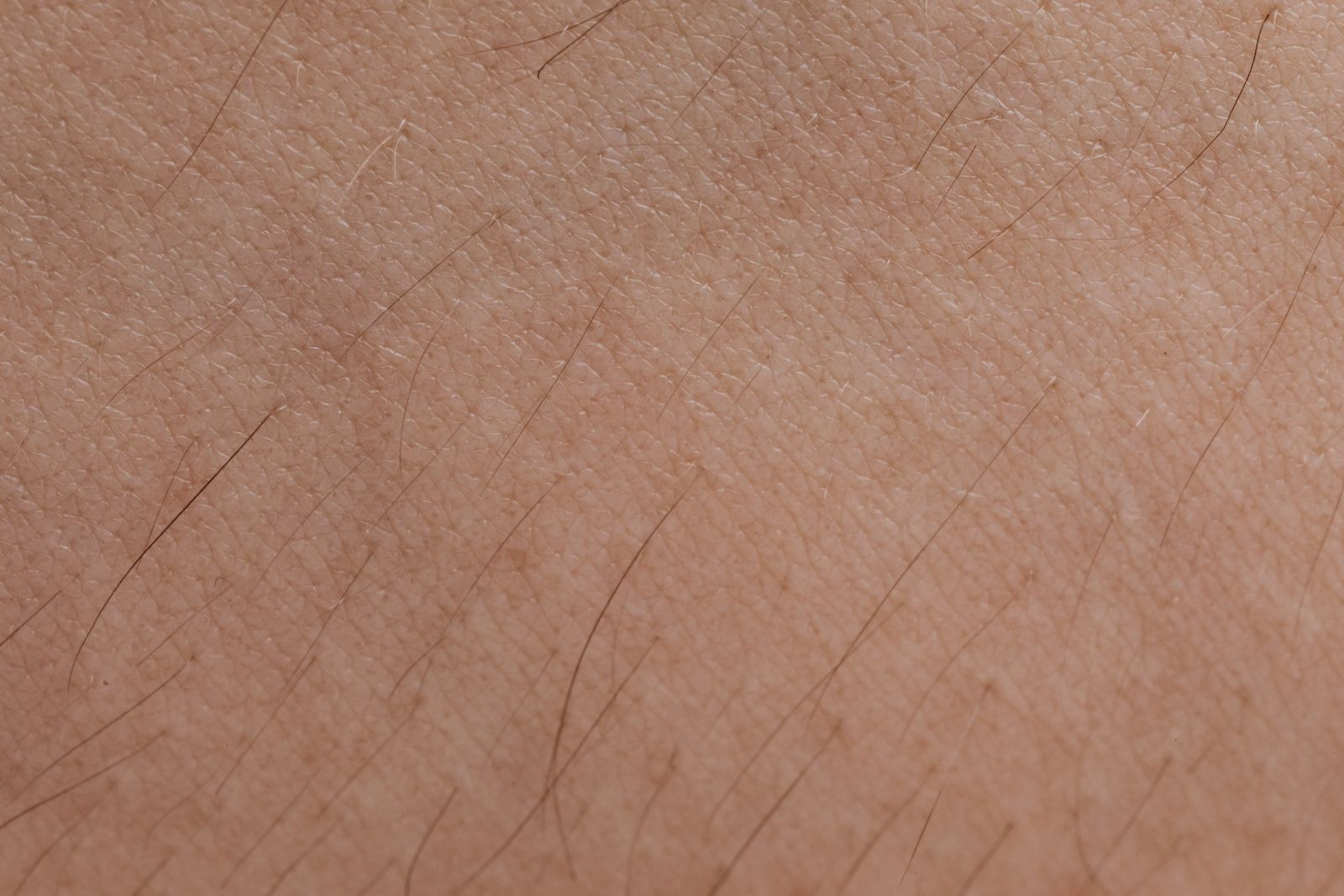
Shaved hair feels thicker because the razor leaves it with a blunt tip instead of a fine point. The hair is the same width it always was.
That blunt tip is also why regrowth can feel prickly, and why itchy regrowth is so common a day or two after a shave.
A hair that has never been cut tapers. Scientific American compares it to a pencil or a javelin: wide at the base, narrowing to a fine end.
A razor slices straight across that taper. What grows back out of your skin is the flat, chopped end of the widest part of the shaft.
That flat end catches your fingertips. Stroke stubble and you feel every square edge, where long hair would just bend and slide.
Length matters too. The Cleveland Clinic explains that short hairs feel stubbly and stiff because their short length gives them increased resistance to bending forces.
Leave the same hair to grow for a few weeks and it softens again as it gets longer and more flexible. If shaving had really made it thicker, it would stay coarse at full length, and it does not.
If you want the smoothest possible feel without that stubble edge, the direction you shave in matters more than people think, and shaving against the grain explains the trade.
Does shaving make hair darker?
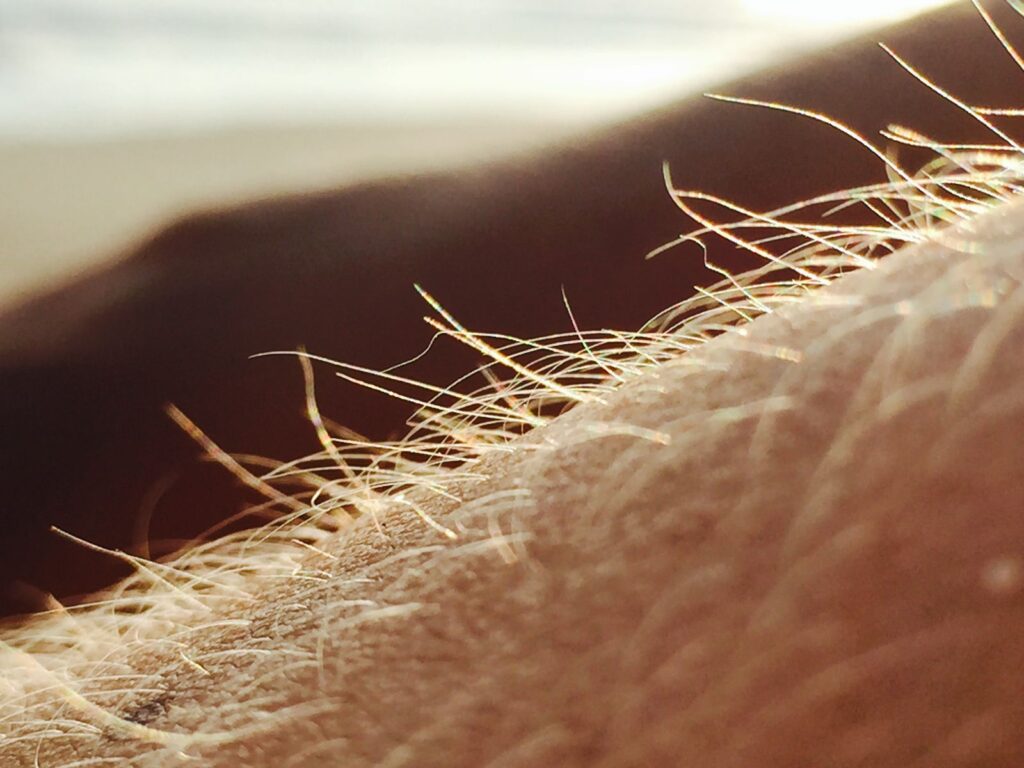
No. Shaving does not change hair colour, but regrowth can look darker for two reasons. Neither involves the hair being any different.
The first is which part of the hair you see. The Cleveland Clinic notes that instead of the thinner and often lighter ends of long hairs, stubble shows you the darker and thicker bases of the shafts.
The second is exposure. According to Scientific American, a freshly grown hair can look very slightly darker because it has not yet been lightened by sun, pollution and chemicals the way older hair has.
There is also a contrast effect that nobody needs a study to notice. Short dark stubble against freshly shaved skin sits right at the surface, in a dense, even pattern, which makes it far more visible than the same hairs lying flat.
If your leg hair looks darker in the week after shaving, give it time. The colour settles as the hair grows, because nothing about its colour was ever altered.
Does shaving make hair grow faster?
No. Shaving does not speed up growth, it only makes the first millimetre of regrowth easier to notice. Hair keeps growing at the rate your follicles set.
UAMS Health, the health system of the University of Arkansas for Medical Sciences, explains that a small amount of growth is much more noticeable on clean-shaven skin than on skin that already has hair on it.
Picture a freshly shaved shin. Two days later you can see and feel every hair. On an unshaved leg, the same two days of growth would be invisible.
That visibility gets mistaken for speed. The 1970 study measured growth rate directly and found shaving made no difference to it.
Why the myth feels true
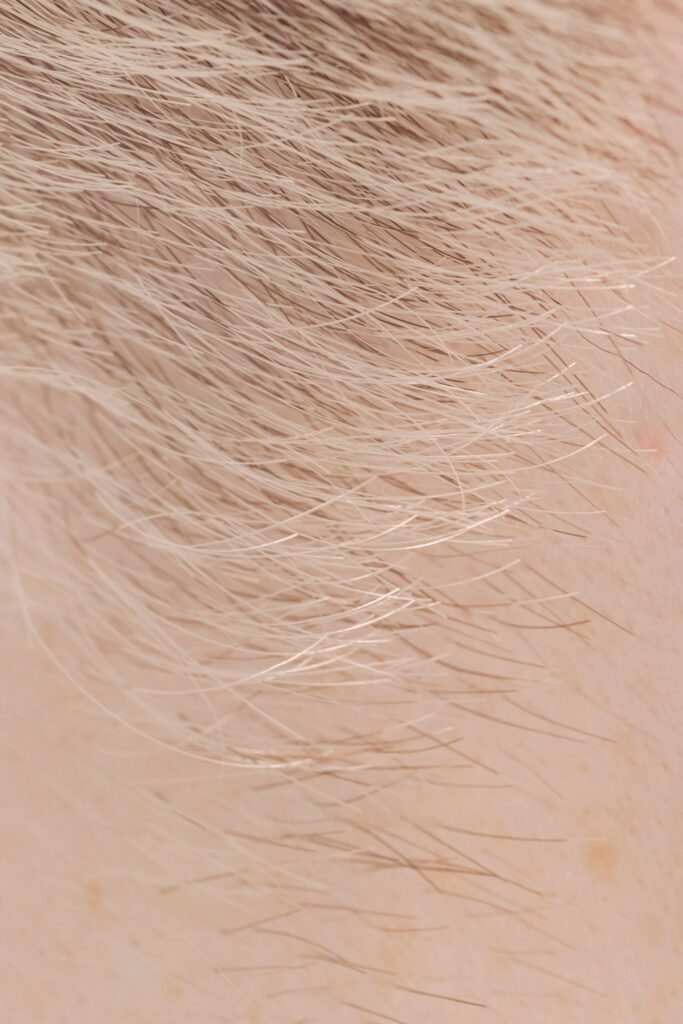
The myth survives because most people start shaving at the same time their body hair really is getting thicker: puberty. The razor gets blamed for a change that hormones were already making.
Before puberty, most of your body is covered in vellus hair. That is the fine, pale, short hair that is barely visible, sometimes called peach fuzz.
During puberty, rising levels of hormones called androgens change some follicles. DermNet describes how androgens cause small vellus follicles making tiny, virtually invisible hairs to become larger follicles making bigger, pigmented terminal hairs.
Terminal hair is the thicker, darker, longer hair you find on legs, underarms and the bikini line in adults. It does not appear overnight. The switch happens gradually over several years.
Now think about when most people pick up a razor for the first time. Usually right at the start of that process, when leg or underarm hair first becomes noticeable.
So a young teenager shaves, the hair grows back, and over the next few years it keeps getting thicker and darker. It was always going to. But from where they are standing, the shaving came first and the thicker hair came after.
That sequence is convincing, and it gets passed from parents to children as fact. It is a textbook case of two things happening together and the wrong one getting the blame.
So when someone asks does shaving make hair grow back thicker, a lot of people answer yes from experience, even though the razor had nothing to do with it.
When body hair really does get thicker
If hair is genuinely getting thicker or spreading to new places as an adult, hormones are the usual cause, and it is worth mentioning to a doctor. Shaving cannot cause it and stopping shaving will not fix it.
When women grow thick, dark hair in a typically male pattern, it is called hirsutism. The NHS lists the face, neck, chest, tummy, lower back, buttocks and thighs as the usual areas.
The NHS says hirsutism is usually linked to changes in androgen levels. The most common cause is what the NHS calls polyendocrine metabolic ovarian syndrome (PMOS), better known as PCOS.
Sometimes there is no obvious cause at all. Rarer causes the NHS and DermNet list include some medicines, Cushing’s syndrome, and tumours of the adrenal glands or ovaries.
That rare possibility is why a change is worth reporting rather than just shaving over. See a GP if you notice:
- Thick, dark hair appearing somewhere it did not grow before, such as your chin, chest or tummy
- Hair changes that come on quickly rather than slowly over years
- Hair changes alongside other changes in your body you cannot explain
- Hair growth that is affecting how you feel about yourself, which is a reason in its own right
DermNet notes that the common types of excess hair growth tend to be long-lasting and often increase with age. Treatment works on the hormones, the hair, or both, so a diagnosis changes your options.
Does waxing or plucking change regrowth?
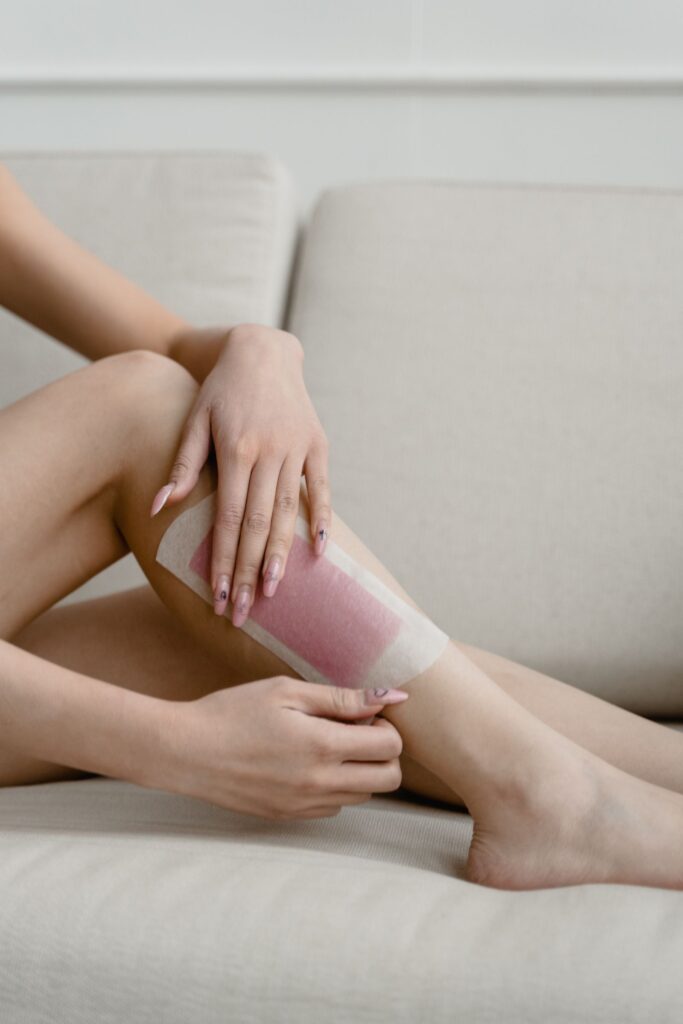
Waxing and plucking do not make hair grow back thicker either, and regrowth takes longer because the whole hair comes out from the root. Claims that they reliably make hair thinner go further than the evidence.
The Cleveland Clinic notes that hair removed by waxing or sugaring grows back more slowly than shaved hair. That is because you have pulled out the entire hair, so a new one has to grow all the way up to the surface.
You will see brand pages claiming regular waxing makes hair come back finer and sparser over time. Scientific American is more cautious: it says that in rare instances, excessive waxing can reduce growth from some follicles because of repeated trauma.
Rare and excessive is a long way from a promise. If waxing thins your hair, treat it as a possible side effect, not a reason to wax.
Here is how the common methods compare on what they actually do.
| Method | What it removes | Effect on the follicle | Changes future regrowth? |
|---|---|---|---|
| Shaving | The hair above the skin | None | No |
| Hair removal cream | The hair at or just below the surface | None | No |
| Waxing, sugaring, plucking | The whole hair, root included | Pulled out, not destroyed | Slower to reappear; rarely, reduced growth from repeated trauma |
| IPL and laser | Damages the follicle with light and heat | Disabled over a course of sessions | Yes, fewer hairs grow back |
| Electrolysis | Destroys individual follicles | Destroyed one by one | Yes, for each treated follicle |
Only the last two rows reach the part of the hair that decides what grows next. That is the whole answer to the myth in one table.
Does shaving make hair grow back thicker on your face?
No. Shaving your face does not make facial hair grow back thicker, and the 1928 study was done on faces. The same follicle biology applies everywhere on the body.
The reason facial hair gets its own reputation is that it is visible, and it often changes for hormonal reasons at the same time people start shaving it.
For women, new coarse hair on the chin or upper lip fits the pattern the NHS describes as hirsutism, which is driven by hormones rather than razors.
If you are a woman shaving your face and the hair is increasing, the razor is not the thing to worry about. The change is worth a conversation with a doctor.
Shaved facial hair does show stubble shadow quickly, for the same blunt tip and visibility reasons that apply to legs.
What actually makes less hair grow back?
Only methods that damage or destroy the follicle reduce how much hair grows back: IPL, laser and electrolysis. Everything else removes hair without changing what comes next.
DermNet describes long wavelength lasers and intense pulsed light as the most effective devices for hair removal. The NHS lists laser hair removal and electrolysis as longer-lasting options, while noting they are not usually permanent.
That “not usually permanent” matters, and it is the honest framing. Light-based treatment gives permanent hair reduction, meaning fewer hairs grow back, rather than removing every hair for good. Our guide on whether IPL is permanent explains exactly what that means and how long results last.
Which option suits you depends on your hair and skin.
Dark hair on light to medium skin is where at-home IPL works best. If that is you, our IPL Laser Hair Removal Handset reduces regrowth over a course of sessions, so there is simply less to shave.
Deeper skin tones are not suited to most home IPL devices, ours included. A clinic offering Nd:YAG laser is the safer route. Check which skin tones and hair colours IPL works on before buying anything.
Grey, white or red hair has too little pigment for light to target. Electrolysis works on any hair colour, one follicle at a time.
If you are weighing up the long-term cost and effort of keeping a razor against switching, IPL vs shaving sets the two side by side.
Frequently asked questions
Does shaving your face make a beard thicker?
No. The 1928 study that tested this used shaved patches on men’s faces and found no faster growth. Facial hair can get thicker over time for hormonal reasons, which is a separate thing from shaving.
Why does my hair feel thicker after shaving?
Because the razor leaves a blunt, square tip where the hair used to taper to a point. Short hair is also stiffer and resists bending. The width of the hair has not changed, and it softens again as it grows out.
Why does hair look darker right after shaving?
No. Stubble shows you the darker base of the hair instead of the lighter tip, and new hair has not yet been lightened by the sun. The colour your follicle produces stays the same.
Will stubble grow back faster if I shave more often?
No. A small amount of growth is simply much easier to see and feel on freshly shaved skin. When researchers measured growth rate on shaved and unshaved legs in 1970, there was no difference. For a sensible gap between shaves by body area, see how often you should shave.
Does waxing make hair grow back thinner?
Not reliably. Waxing pulls hair out from the root so regrowth takes longer to appear. Scientific American notes that only in rare cases does excessive waxing reduce growth, through repeated trauma to the follicle.
Can shaving make more hairs grow?
No. The number of follicles producing hair is not affected by cutting the hair above the skin. If hair is appearing in new places, hormones are the likely reason, and a GP can check.
Why is my body hair getting thicker if it is not from shaving?
Usually hormones. Androgens turn fine vellus hair into thicker terminal hair during puberty, and in adults hormonal conditions such as PMOS, better known as PCOS, are the most common cause of new thick hair. See a GP if it is new or changing quickly.
What hair removal method actually reduces regrowth?
IPL, laser and electrolysis, because they are the only methods that damage or destroy the follicle. IPL and laser give permanent hair reduction rather than total removal, and they suit dark hair best. Electrolysis works on any hair colour.
Final thoughts
Does shaving make hair grow back thicker? No, and a century of evidence agrees. The coarse feel is a blunt tip, the dark look is the base of the hair, and the speed is only visibility.
If you shave and are happy with it, carry on. You are not making anything worse, and does shaving make hair thicker is a question you can stop worrying about.
If your hair is genuinely getting thicker or appearing somewhere new, look at hormones, not your razor, and mention it to a GP.
If you are tired of stubble altogether, only follicle-level methods change what grows back. For dark hair on light to medium skin, our IPL handset is the affordable at-home route; for deeper skin tones, a clinic Nd:YAG laser; and for light hair, electrolysis.
Stubble is annoying. It is just not evidence of anything.