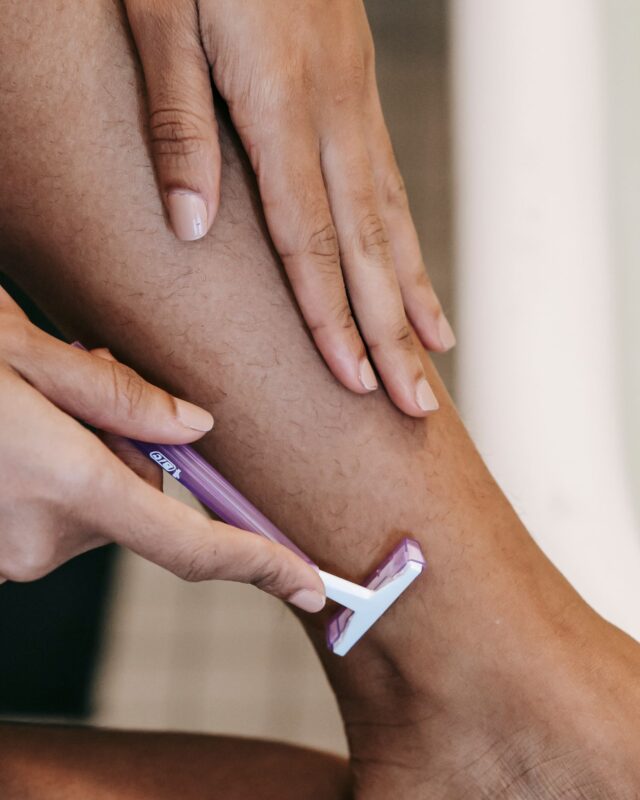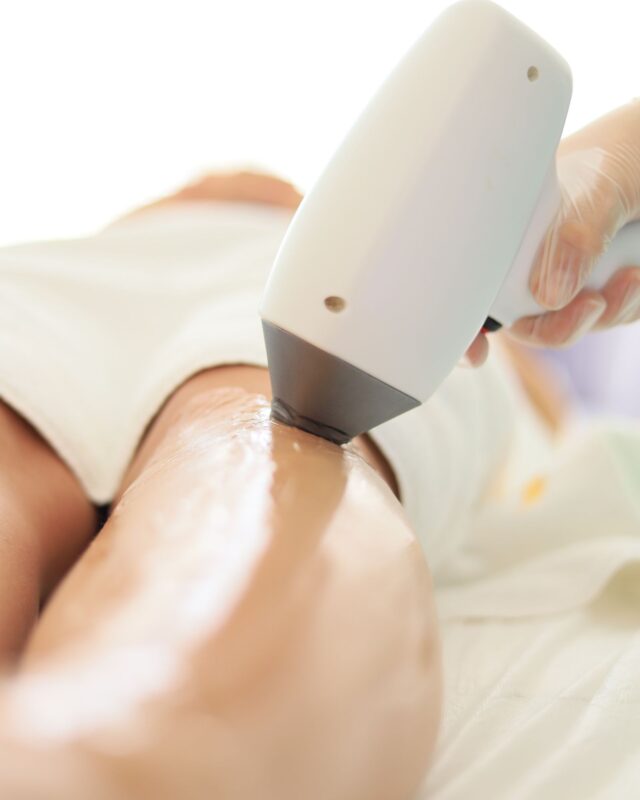
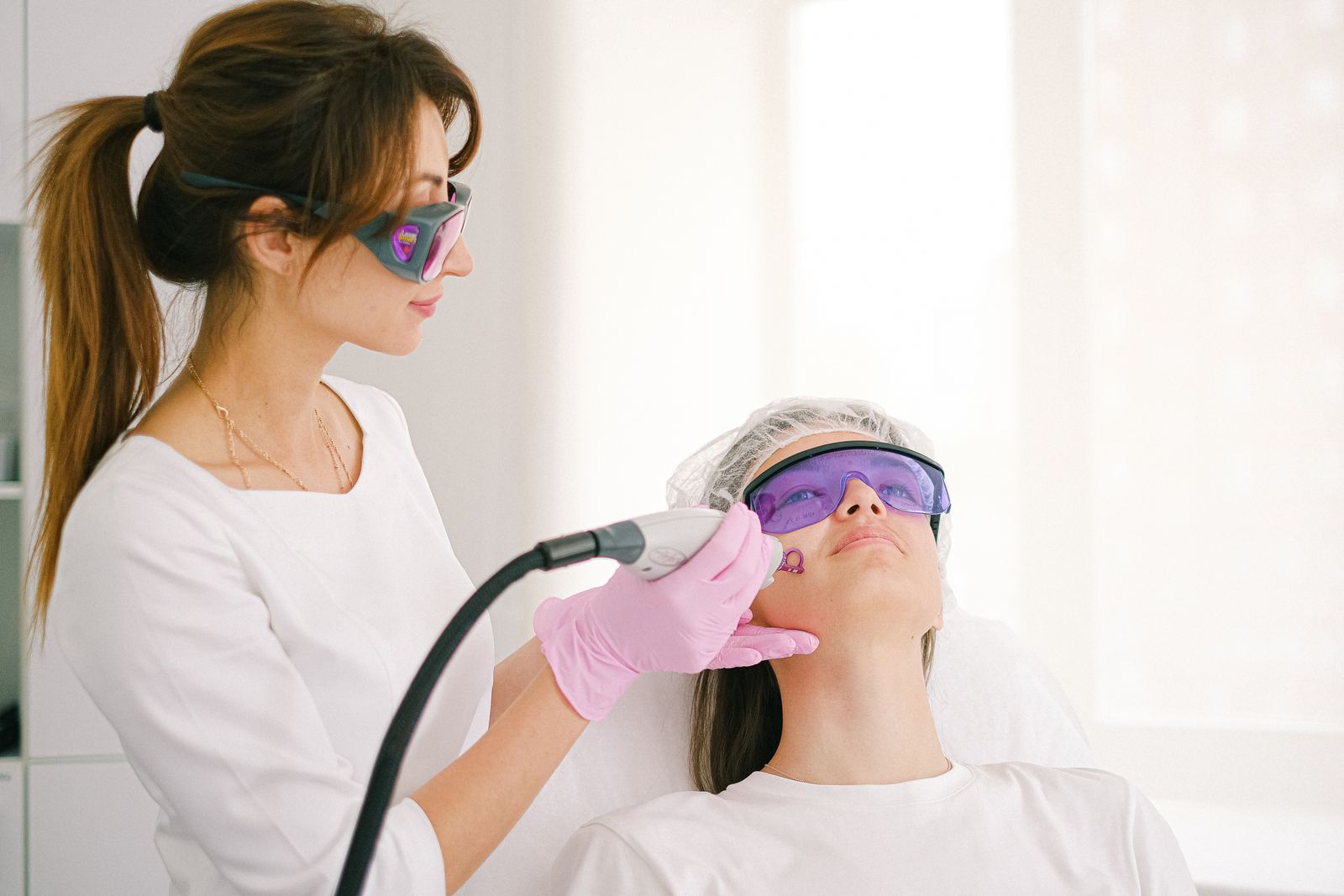
Short answer: Electrolysis destroys follicles one at a time and works on any hair colour, but it is slow. Laser and IPL treat large areas quickly, but only reduce hair rather than remove it, and they need dark hair to work at all.
Electrolysis vs laser vs IPL. Three methods, one goal, and a lot of confused marketing in between.
The electrolysis vs laser question usually comes up when someone has tried light-based treatment and it did nothing. Often because their hair was the wrong colour for it.
Here is what actually separates electrolysis vs laser vs IPL, and which one fits which person.
Electrolysis vs laser vs IPL: the one-line difference
Electrolysis uses electricity down a probe. Laser and IPL use light. That single difference drives everything else.
Electrolysis slides a very fine probe into an individual follicle and delivers a current that destroys it. One hair at a time.
Laser and IPL fire light at an area of skin. Pigment in the hair absorbs it, converts it to heat, and that heat damages the follicle. Many hairs at once.
So electrolysis is precise and slow. Light-based methods are fast and approximate.
The other consequence is the one that decides most cases. Electricity does not care what colour your hair is. Light absolutely does.
What “permanent” actually means here
This is where the electrolysis vs laser comparison gets genuinely important, because the words are regulated and they do not mean what people assume.
In the US, laser and IPL devices are cleared for permanent hair reduction, not permanent hair removal. Those are different claims.
Permanent hair reduction is defined as a long-term, stable reduction in the number of hairs regrowing, measured at 6, 9 and 12 months after a course finishes.
Read that carefully. It does not promise every hair is gone. It promises measurably fewer hairs that stay fewer.
Electrolysis is the method generally recognised as achieving permanent hair removal, because destroying a follicle individually is a different kind of outcome from damaging it with heat.
So when a laser clinic says permanent, they mean reduction. That is not dishonest, it is the actual approved wording, but it is easy to hear as something stronger.
How electrolysis works, and why it differs from laser
An electrologist inserts a probe roughly the width of the hair itself into the follicle, then applies a current. The follicle is destroyed and the hair is lifted out.
There are three ways to do it.
- Galvanic. A chemical reaction destroys the follicle. Slow but thorough.
- Thermolysis. High frequency current produces heat. Faster.
- Blend. Both at once, which is what most practitioners use.
Because it is done hair by hair, the maths is unforgiving. A small area like an upper lip is manageable. Full legs would take an extremely long time and a lot of appointments.
You also need multiple passes, because a follicle treated during a resting phase can recover.
Electrolysis vs laser vs IPL, side by side
| Electrolysis | Clinic laser | At-home IPL | |
|---|---|---|---|
| Method | Electric current, per follicle | Single wavelength light | Broad spectrum light |
| Claim | Permanent removal | Permanent reduction | Permanent reduction |
| Works on grey, red, blonde | Yes | No | No |
| Works on deep skin tones | Yes | Yes, with Nd:YAG | Usually not |
| Speed | Very slow, hair by hair | Fast | Moderate |
| Best for | Small areas, any hair colour | Large areas, dark hair | Large areas, at home |
| Sessions | Many, over months or years | 6 to 8, plus top-ups | 8 to 12, plus top-ups |
| Done by | Trained electrologist | Trained technician | You |
Electrolysis vs laser on grey, red and blonde hair
This is the single most useful thing in this article, so it gets said plainly.
If your hair is grey, white, red or very light blonde, electrolysis is your only real option.
Laser and IPL both need melanin, the dark pigment in hair, to absorb their light. Grey and white hair have essentially none. Red hair uses a different pigment that barely absorbs it. Very light blonde has too little to matter.
No laser wavelength solves this, and no home device at any price solves it either. It is not a quality problem, it is a physics problem.
Electrolysis sidesteps the whole issue because it never relies on colour. The probe goes into the follicle and the current does the work regardless.
So if you have spent money on light-based treatment and seen nothing happen, check your hair colour before you blame the device. We cover this fully in will IPL work on my skin tone and hair colour?
Time, pain and cost
Time. In electrolysis vs laser, electrolysis is the slowest by a wide margin. Treating an upper lip is reasonable. Treating both legs is a commitment measured in years, not months.
Pain. Electrolysis is generally considered the most uncomfortable of the three, because each follicle gets its own zap. Laser is next. IPL is usually the gentlest, described by most people as a warm snap.
Cost. Electrolysis is charged by time, usually in fifteen minute or hourly blocks. That makes small areas affordable and large areas very expensive. Laser is charged per session per area. Home IPL is a single purchase, which we break down in IPL cost vs laser hair removal clinics.
The pattern across all three: electrolysis wins on permanence and range, and loses badly on speed.
Electrolysis vs laser: what a session is actually like
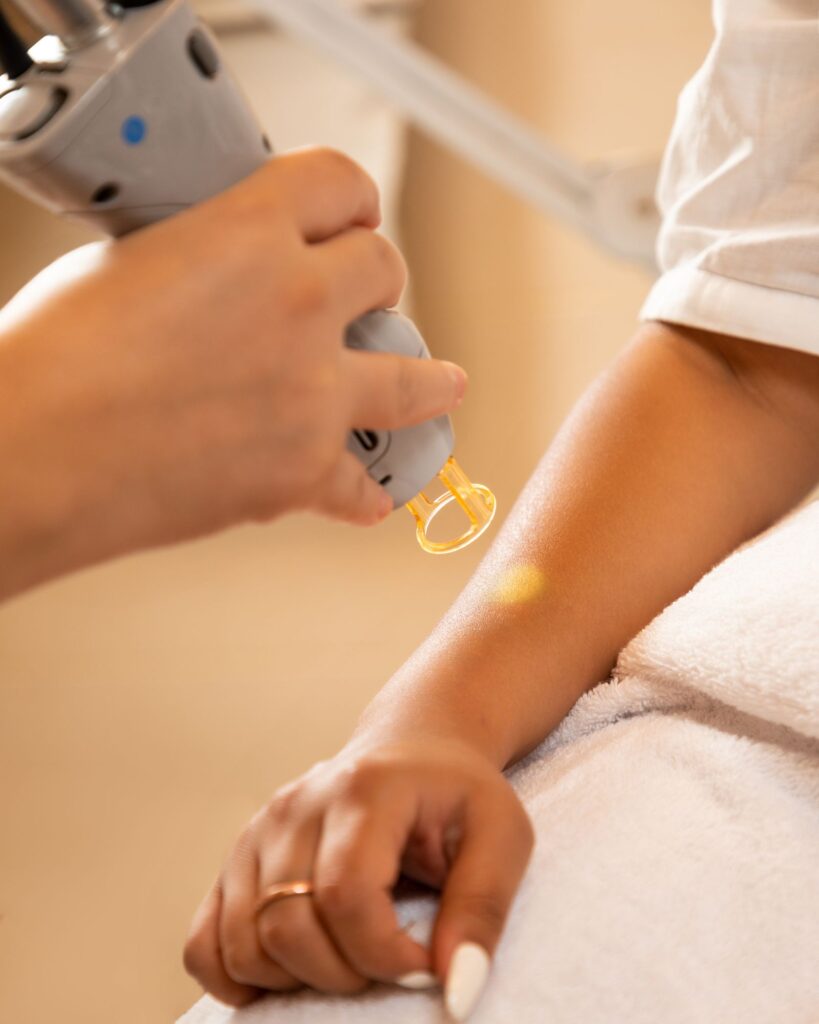
The two experiences are very different, and knowing which you are signing up for matters.
An electrolysis session is quiet and slow. You lie down, the electrologist works under a magnifying lamp, and each hair is treated individually. Sessions are usually booked in fifteen, thirty or sixty minute blocks.
You feel a small sharp sensation per follicle. It is repetitive rather than intense, and most of the discomfort comes from how many times it happens.
A laser session is faster and louder. You wear eye protection, the handpiece moves across the area in overlapping passes, and each pulse covers a patch of skin rather than a single hair.
Full legs can be done in well under an hour. The sensation is a hot snap, and clinics usually use cooling to take the edge off.
An at-home IPL session sits between the two for time and below both for intensity. You shave first, then work across the area flash by flash, which takes twenty minutes or so per leg.
So the electrolysis vs laser trade shows up right there in the appointment book. One is many short precise sessions, the other is a few fast ones.
Who should be doing your treatment
In electrolysis vs laser, and IPL too, all three put energy into your skin. Who is holding the device matters.
Electrolysis is a licensed profession in many US states, with training and hygiene requirements attached. Ask about certification, and ask whether probes are single use and disposable. They should be.
Laser clinics vary enormously, from doctor-led practices to salons. Ask which laser they use, whether they patch test, and who is actually operating it.
Home IPL has no practitioner at all, which is exactly why home devices are limited to lower energy. You are the safety system, so the skin tone chart and the instructions are not optional reading.
Where IPL fits in the electrolysis vs laser picture
IPL is the least powerful of the three and the only one you can do yourself.
That trade is the entire point. You give up some effectiveness and gain not having to book anything, not paying per area, and not sitting in a clinic for months.
For the right person, meaning dark hair on light to medium skin, that trade is very good. For the wrong person it is money wasted, which is why the honest advice is to check suitability first.
Read does at-home IPL actually work? for what the research shows, and IPL vs laser hair removal for how the two light-based methods compare.
Electrolysis vs laser vs IPL: which should you choose?
Choose electrolysis if your hair is grey, white, red or light blonde, you want genuine permanence, or you are treating a small stubborn area like the chin or upper lip.
Choose clinic laser if you have dark hair and want large areas handled quickly, or you have a deeper skin tone and need Nd:YAG.
Choose at-home IPL if you have dark hair on light to medium skin, want several areas covered, and would rather do it yourself for a fraction of the cost.
The electrolysis vs laser choice is not always either or. Plenty of people end up combining them. IPL or laser to clear the bulk of dark hair, then electrolysis for the stubborn grey strays that light was never going to touch.
If IPL is the right fit for you, our IPL Laser Hair Removal Handset comes with a 90-day money-back guarantee, long enough to finish a course and judge it properly.
Frequently asked questions
Is electrolysis better than laser?
In electrolysis vs laser, electrolysis wins on permanence and on hair colours light cannot treat. For speed and for large areas, no. Electrolysis works hair by hair, so it is far slower, while laser treats a whole area per pulse.
Is electrolysis the only permanent hair removal?
It is the method generally recognised as achieving permanent hair removal. Laser and IPL devices are cleared for permanent hair reduction instead, which means measurably fewer hairs regrowing rather than none.
Does electrolysis work on grey and red hair?
Yes. It uses electric current rather than light, so it does not depend on pigment in the hair. This is the main reason to choose it over laser or IPL.
Which hurts more in electrolysis vs laser?
Electrolysis is usually described as the most uncomfortable, since each follicle is treated individually. Laser is next, and IPL is generally the mildest of the three.
How long does electrolysis vs laser take?
Far longer than laser. Small areas such as the upper lip are practical, while large areas like full legs can take many sessions over a long period. It is charged by time rather than by area.
Can I combine electrolysis with laser or IPL?
Yes, and it is a common approach. Use light-based treatment to clear the bulk of dark hair, then electrolysis on the grey or fair strays that light cannot target.
Is electrolysis safe for dark skin?
Yes. Because it does not rely on a contrast between hair pigment and skin pigment, it avoids the burn and pigmentation risks that restrict IPL on deeper skin tones.
Which is cheapest in electrolysis vs laser vs IPL?
At-home IPL, if it suits your hair and skin, because it is one purchase covering every area. Electrolysis is affordable for small areas and expensive for large ones, since you pay for time.