Short answer: Strawberry legs is a description, not one condition. The dark dots can be open pores, dark hair still sitting in the follicle, keratosis pilaris, folliculitis, ingrown hairs or dark marks left by old bumps, and each one needs a different fix. Gentle exfoliation and a good moisturiser help most types, but harsh scrubbing makes several of them worse.
Strawberry legs is the name people give to small dark dots on the legs, usually most noticeable after shaving, that look a bit like the seeds on a strawberry.
This guide is for anyone who has spotted those dots and wants to know what they are, what causes strawberry legs, and how to get rid of them without making the skin worse.
It covers the six things that get called strawberry legs, a simple look and touch test to tell them apart, what actually clears each one, and when the dots are worth showing to a doctor.
The short verdict: most strawberry legs are harmless and improve with gentle exfoliation, moisturiser and kinder shaving. The mistake to avoid is scrubbing harder, because the dots are usually not dirt.
What are strawberry legs?
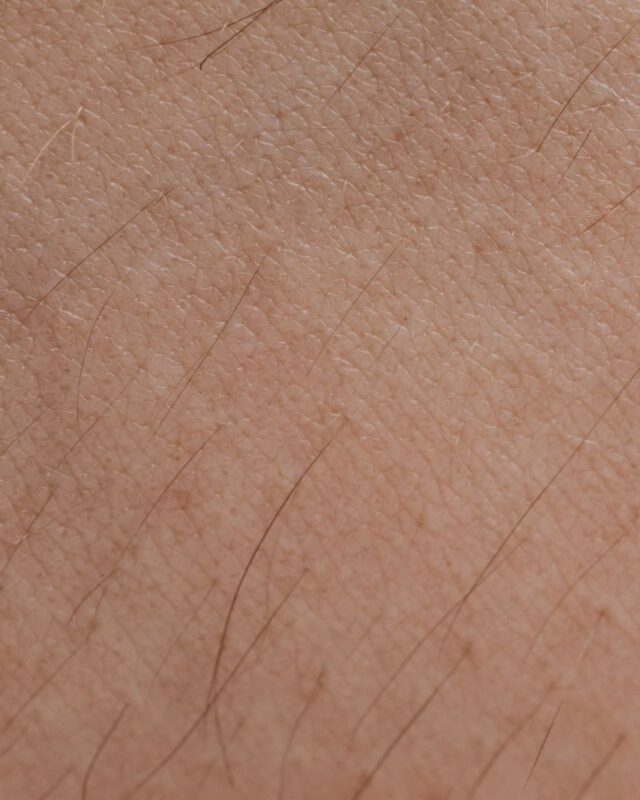
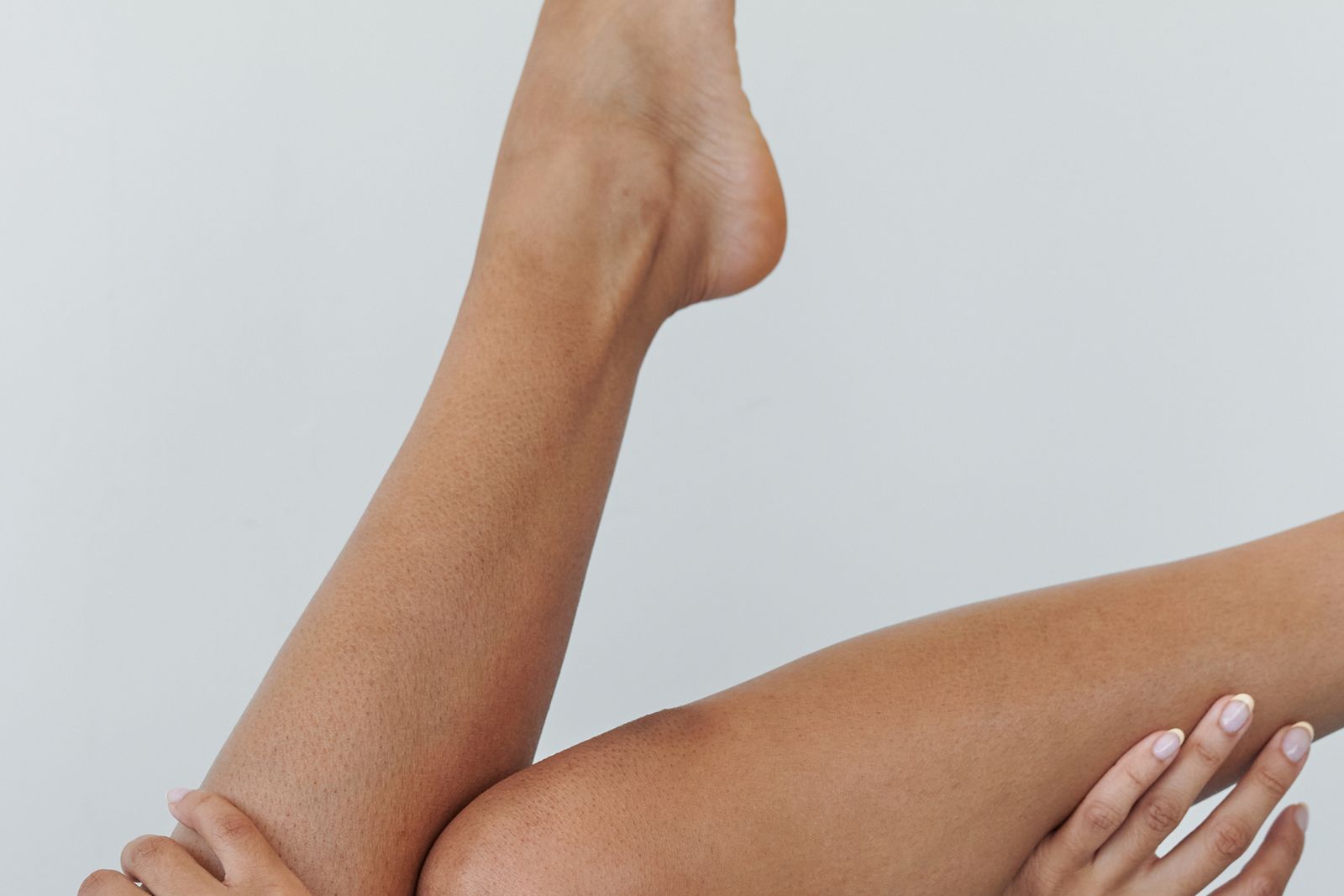
Strawberry legs are clusters of small dark dots on the legs, sitting in the pores and hair follicles, that are usually most visible straight after shaving. The name comes from the look, not from a medical diagnosis.
The Cleveland Clinic describes strawberry legs as clusters of small dark spots on the legs after shaving, caused by hair follicles or pores clogged with dead skin, bacteria or oil.
Its dermatologist lists several different causes under that one name, from clogged pores and dry skin to keratosis pilaris and folliculitis. That matters, because the causes do not share a fix.
Some people also call it strawberry skin. Whatever the name, the dots show up best on pale skin with dark hair, and on the lower legs where the pores and follicles are easiest to see.
Why do the dots on strawberry legs look dark?
The dots look dark because of what is inside the pore, and the sources do not fully agree on what that is. Either way, it is not simply dirt you can wash out.
The Cleveland Clinic explains that oil trapped in a pore combines with oxygen, oxidises and turns darker than usual, which is why open, clogged pores look like dark dots.
DermNet, the dermatology reference, puts it differently for blackheads. It says open comedones are black because of surface pigment, called melanin, rather than dirt.
Both explanations point to the same practical lesson. You cannot scrub the colour out, so scrubbing harder does not clear strawberry legs and can irritate the skin around them.
There is also a simpler reason some dots look dark. A razor cuts hair at the surface of the skin, so the rest of each dark hair is still sitting in the follicle and can show through pale skin as a dot.
What causes strawberry legs?
Strawberry legs are caused by six main things: clogged open pores, hair left in the follicle after shaving, keratosis pilaris, folliculitis, ingrown hairs, and dark marks left behind after skin inflammation. Several can happen on the same pair of legs at once.
Clogged open pores
Open pores clogged with oil and dead skin are the classic cause of strawberry legs. They look like flat dark dots, and the skin between them feels smooth.
These are open comedones, the same thing as blackheads on your nose, just on your legs. The Cleveland Clinic lists clogged pores and dry skin as separate causes, and notes that shaving dry skin is more likely to irritate it.
This is the type most helped by a chemical exfoliant, which is covered further down the page.
Dark hair still in the follicle
If you have dark hair and pale skin, some of the dots are simply the cut ends of hairs still inside the follicles. They look like dark pores on legs, but they are hair, not clogging.
A quick test is to look again a day or two after shaving. If the dots have turned into prickly stubble, they are regrowth.
Exfoliating will not change this type at all. Shaving less often, or reducing how much hair grows back, is the only thing that does.
Keratosis pilaris
Keratosis pilaris is a very common, harmless condition that causes small rough bumps in the hair follicles, often on the thighs, upper arms and bottom. It can pass for strawberry legs, but it feels different.
The NHS explains that it happens when hair follicles become blocked with a build-up of keratin, a substance found in skin, hair and nails, and that it is thought to run in families.
The bumps are usually skin coloured, red on white skin, or darker on brown or black skin. The skin feels dry and rough, a bit like sandpaper or goosebumps that never go away.
DermNet says keratosis pilaris affects around 50 to 70% of teenagers and 40% of adults. It is not infectious, so you cannot catch it or pass it on.
The key point: the NHS advises against harsh scrubs for keratosis pilaris. This type needs moisture and gentleness, not a rough exfoliating session.
Folliculitis
Folliculitis is inflammation of the hair follicles, and it shows up as tender red spots, often with a small pus-filled head. It is the one type that can be an actual infection.
DermNet explains that folliculitis often appears as hairs regrow after shaving, waxing, electrolysis or plucking, and that bacterial folliculitis is commonly caused by Staphylococcus aureus.
Folliculitis tends to sting, itch or feel sore rather than just look dotty. If your itching started days after a shave, our guide on how to stop itching after shaving sorts out the likely causes by timing.
Ingrown hairs
Ingrown hairs are hairs that curl back or grow sideways into the skin, leaving raised bumps that can look dark or red. Sometimes you can see the hair trapped under the surface.
The NHS describes them as bumps that are often itchy, and advises against scratching, picking or squeezing them.
Our guide on how to treat ingrown hairs covers what to do with one, and how to prevent razor bumps covers stopping them coming back.
Dark marks left after bumps heal
On medium and deeper skin tones, some dots are flat dark marks left behind after bumps or irritation have healed. The bump has gone, but the colour has stayed.
DermNet calls this postinflammatory hyperpigmentation: temporary darkening that follows injury or inflammation of the skin. It notes it is more common in darker skin, where the colour tends to be more intense and last longer.
This is the type most likely to be made worse by aggressive scrubbing. DermNet warns that physical treatments can aggravate it by injuring the top layer of skin.
Which type of strawberry legs do you have?
Look at the dots closely and run your hand over them, then match what you see and feel to this table. The feel of the skin is the most useful clue.
| What you see and feel | Most likely cause | First thing to try |
|---|---|---|
| Flat dark dots, skin feels smooth | Clogged open pores | A gentle chemical exfoliant such as salicylic acid |
| Dark dots that turn into stubble in a day or two | Dark hair in the follicle | Shave less often or reduce regrowth |
| Rough, dry, sandpaper bumps, also on thighs or upper arms | Keratosis pilaris | Moisturiser with urea or lactic acid, no harsh scrubs |
| Red, tender spots, sometimes with pus | Folliculitis | Stop shaving the area, see a doctor if it spreads |
| Raised bumps, sometimes with a hair trapped under the skin | Ingrown hairs | Do not pick, exfoliate gently |
| Flat brown or dark marks where old bumps were | Postinflammatory hyperpigmentation | Sunscreen and patience, no scrubbing |
If more than one row fits, you probably have a mix. That is common, and the gentle routine below suits all of them.
How to get rid of strawberry legs
To get rid of strawberry legs, exfoliate gently, moisturise every day, and change the habits that clog or irritate your follicles. Then match any extra step to the type you have.
The Cleveland Clinic lists regular exfoliation and moisturising, a sharp clean razor with a moisturising shaving cream, and hair removal alternatives as the main ways to reduce the dots.
Exfoliate gently, not hard
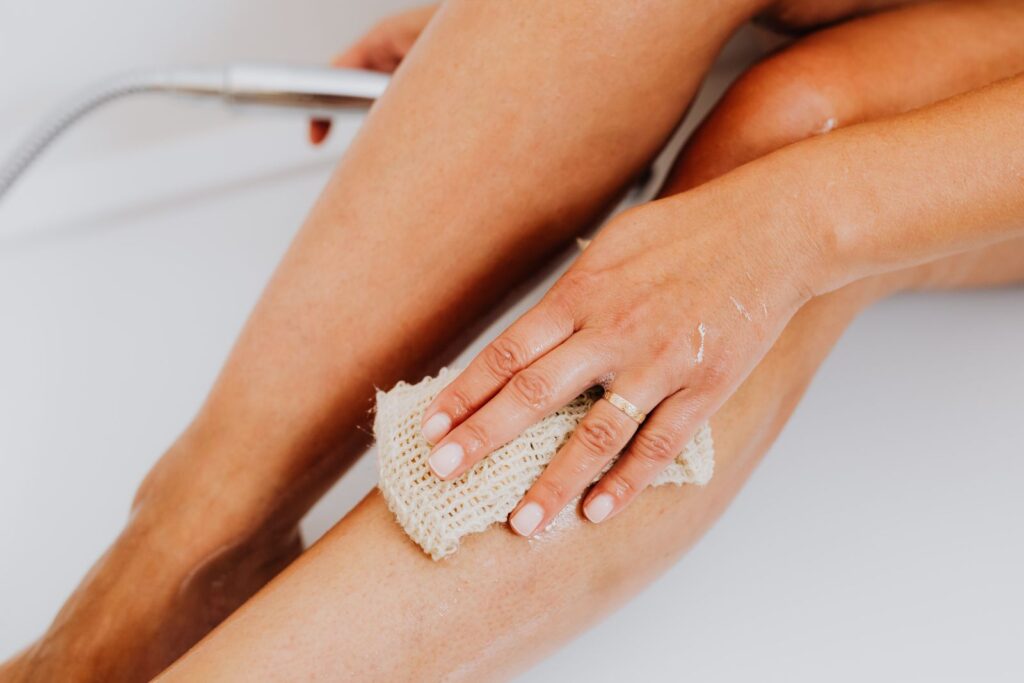
Gentle exfoliation removes the dead skin that clogs pores and follicles, but scrubbing hard irritates the skin and can make the dots look worse. Soft pressure is the whole point.
The American Academy of Dermatology advises gently removing dead skin with a loofah. The NHS suggests a washcloth or exfoliating mitt, and says to avoid harsh scrubs.
Use light pressure in the shower, a couple of times a week to start with. If your legs look red or feel sore afterwards, you pressed too hard or went too often.
Try a chemical exfoliant for dark pores
A chemical exfoliant loosens dead skin and clears clogged pores without any scrubbing, which makes it the better choice for dark pores on legs. Look for salicylic acid, glycolic acid or lactic acid on the label.
The Cleveland Clinic lists alpha hydroxy acids, beta hydroxy acid and glycolic acid among treatments for strawberry legs. Salicylic acid is the beta hydroxy acid, and DermNet lists it as a treatment for blackheads.
These come as body washes, lotions and pads. Start with one product, use it as the label directs, and give it several weeks before judging it.
Moisturise every day
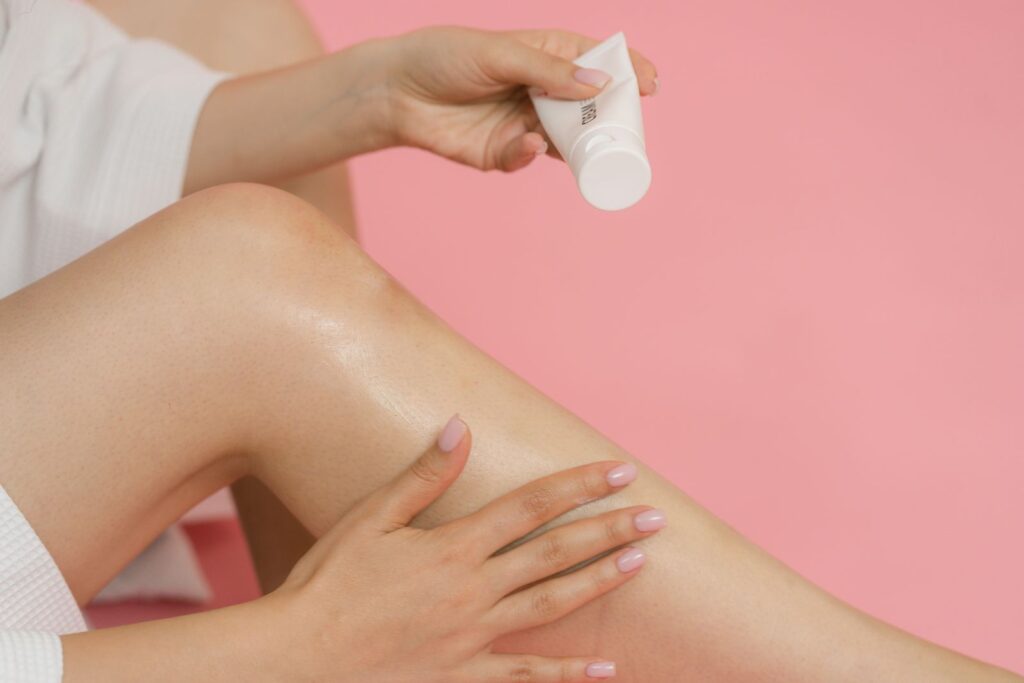
Moisturising daily keeps dry skin from building up around the follicles, and it is the main treatment for keratosis pilaris. Timing makes a difference.
The American Academy of Dermatology recommends applying moisturiser within 5 minutes of getting out of the shower or bath, while the skin is still damp, and using it at least 2 or 3 times a day for keratosis pilaris.
It suggests moisturisers containing urea or lactic acid. DermNet lists creams with urea, salicylic acid, lactic acid or alpha hydroxy acids for the same job.
The NHS adds a couple of simple habits: use mild, unperfumed soap, and have cool or lukewarm showers rather than hot ones.
Do you need to change how you shave?
Yes, if shaving is making the dots more obvious, because a rough shave irritates the follicles that strawberry legs live in. A few changes do most of the work.
The Cleveland Clinic says using an old, dull razor or shaving without shaving cream can harm your skin, and recommends a sharp, clean razor with a moisturising shaving cream.
- Soften the hair first. DermNet suggests leaving shaving cream or gel on the skin for 2 to 3 minutes before you shave.
- Change blades as soon as they feel blunt. DermNet advises this, and a dull blade drags rather than cuts.
- Go with the grain on problem areas. A closer shave against the grain comes with a trade, which shaving against the grain explains.
- Do not shave every day. The NHS includes this in its advice on avoiding ingrown hairs, and our guide on how often to shave suggests a gap for each area.
- Moisturise afterwards. Dry, freshly shaved skin is more likely to get irritated.
What makes strawberry legs worse?
Harsh scrubbing, hot water, dull razors, picking and sun on dark marks are the habits most likely to make the dots worse. Several feel helpful in the moment.
- Scrubbing hard. The NHS advises against harsh scrubs for keratosis pilaris, and DermNet warns that physical treatments can aggravate dark marks.
- Hot showers and perfumed soap. The NHS lists both as things to avoid for keratosis pilaris.
- Picking and squeezing. The NHS warns against scratching, picking or rubbing the bumps, and against squeezing ingrown hairs.
- Dry shaving or a blunt razor. Both are on the Cleveland Clinic’s list of things that harm skin.
- Sun on dark marks. DermNet recommends daily broad spectrum SPF 50+ sunscreen to stop postinflammatory hyperpigmentation getting darker.
How long does it take strawberry legs to clear?
Strawberry legs usually take weeks to months to improve, depending on the cause, and some types need ongoing care rather than a one-off fix. Nothing reliable clears them overnight.
DermNet says blackhead treatments usually take weeks to months to work and often need to be continued long term.
For keratosis pilaris, the American Academy of Dermatology says clearing takes time, and to tell your dermatologist if there is no improvement after 4 to 6 weeks. It also says treatment cannot cure it, so you keep treating the skin to keep the bumps under control.
The NHS notes that most people have keratosis pilaris for years, and that it may eventually clear up by itself.
Dark marks fade on their own timetable. DermNet describes postinflammatory hyperpigmentation as temporary, but notes it lasts longer on darker skin.
Will laser hair removal or IPL get rid of strawberry legs?
Laser hair removal and IPL can help the types driven by shaving and dark hair, but they do not treat keratosis pilaris, clogged pores or dark marks directly. They reduce the hair, not the skin condition.
The Cleveland Clinic lists laser hair removal and electrolysis as longer-term options. DermNet lists laser-assisted hair removal as a treatment for ingrown hairs in people with keratosis pilaris.
The logic is simple. Less hair means fewer shaves, fewer dark hair ends in the follicles, and fewer chances for ingrown hairs and folliculitis.
Light-based hair removal gives permanent hair reduction rather than total removal, as our guide to whether IPL is permanent explains.
Dark hair on light to medium skin is where our IPL Laser Hair Removal Handset works, reducing regrowth over a course of sessions.
Deeper skin tones are not suited to most home IPL devices, ours included, and a clinic offering Nd:YAG laser is the safer route. Grey, white or red hair has too little pigment for light to target, so electrolysis is the option.
Check which skin tones and hair colours IPL works on before buying anything.
What about other hair removal? The Cleveland Clinic mentions epilators as an alternative to shaving, and our guide to what an epilator is covers how they work. Bear in mind that DermNet lists plucking and waxing among the triggers for folliculitis, so they are not a fix for that type.
When should you see a doctor about strawberry legs?
See a doctor if the spots are painful, swollen, itchy or spreading, or if the skin has not improved after several weeks of gentle care. Most cases never need that, but some causes do.
The Cleveland Clinic advises talking to a healthcare provider if you have any pain, swelling or itching, to rule out other conditions.
- Spots are red, tender, filling with pus or spreading
- Bumps turn into larger, painful lumps or boils
- The skin becomes itchy or inflamed
- Keratosis pilaris has not improved after 4 to 6 weeks of treatment
- Folliculitis keeps coming back
DermNet says a doctor should check folliculitis that persists, recurs or turns into boils. A doctor can also offer prescription options the Cleveland Clinic lists, such as retinoids, antibiotics or corticosteroids.
Frequently asked questions
Are strawberry legs permanent?
Usually not. Clogged pores, ingrown hairs and folliculitis tend to improve with gentle care and kinder shaving. Keratosis pilaris can last for years, though the NHS says it may clear up by itself, and dark marks fade slowly.
Can you get rid of strawberry legs overnight?
No. Exfoliants and moisturisers take weeks to show results, and DermNet says blackhead treatments can take weeks to months. Scrubbing hard for a quick result is more likely to leave the skin red and irritated.
Is strawberry skin the same as keratosis pilaris?
Not exactly. Strawberry skin is a description of dark dotted skin, while keratosis pilaris is one specific cause. Keratosis pilaris feels rough and dry, while clogged pores usually look dark but feel smooth.
Are strawberry legs contagious?
Most types are not. The NHS says keratosis pilaris is not infectious. Folliculitis can be caused by bacteria, so avoid sharing razors and towels, and see a doctor if spots spread.
Does waxing cause strawberry legs?
It can contribute. The Cleveland Clinic lists waxing among the factors behind strawberry legs, and DermNet says folliculitis often appears as hair regrows after waxing or plucking.
Do dark pores on legs mean my legs are dirty?
No. The Cleveland Clinic says trapped oil darkens as it oxidises, and DermNet says blackheads are dark because of melanin rather than dirt. Washing harder will not remove the colour.
What is the best exfoliant for strawberry legs?
For flat dark pores, a chemical exfoliant with salicylic acid, glycolic acid or lactic acid is usually gentler than a scrub. For rough keratosis pilaris bumps, a moisturiser with urea or lactic acid is what dermatology sources recommend.
Will IPL get rid of strawberry legs?
It can help the types caused by shaving and dark hair, because it reduces regrowth over a course of sessions. It suits dark hair on light to medium skin, and it does not treat keratosis pilaris or dark marks.
Final thoughts
Strawberry legs is a name for a look, and the fix depends on which cause is behind the dots. Check how the skin feels before you buy anything.
If the dots are flat and the skin feels smooth, try a gentle chemical exfoliant and moisturise every day.
If the skin feels rough and dry, treat it as keratosis pilaris: urea or lactic acid moisturiser, lukewarm showers, and no harsh scrubs.
If the spots are red, sore or full of pus, stop shaving the area and see a doctor if they spread or keep coming back.
If the dots are mostly dark hair and they come back after every shave, shaving less is the real fix. For dark hair on light to medium skin, our IPL handset is the at-home route; for deeper skin tones, a clinic Nd:YAG laser; and for light hair, electrolysis.